
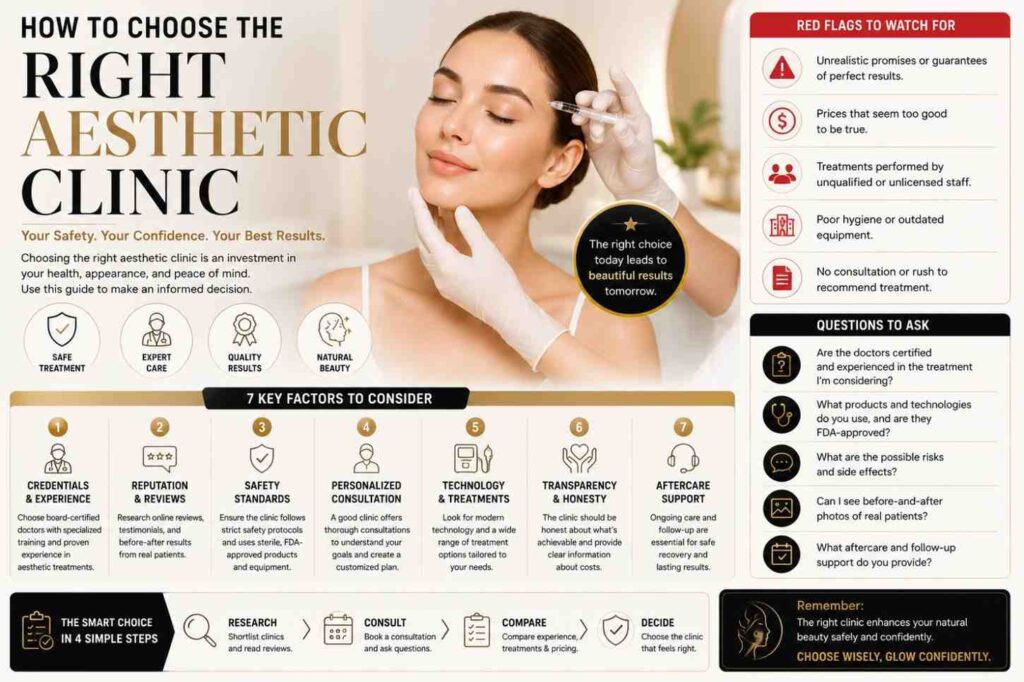
How to Choose the Right Aesthetic Clinic
Choosing the right aesthetic clinic is not just a cosmetic decision—it is a medical and safety decision that directly impacts your skin health and long-term results. With the rapid growth of aesthetic procedures such as Botox, dermal fillers, laser treatments, and skin rejuvenation therapies, the number of clinics has increased significantly, but quality standards vary widely.
A good aesthetic clinic should combine medical expertise, proper hygiene standards, and ethical treatment planning. The focus should always be on patient safety and realistic outcomes rather than aggressive marketing or unrealistic promises.
In this guide, we will explore how to evaluate an aesthetic clinic step by step so you can make an informed and confident decision before undergoing any treatment.
The first and most important factor is checking the qualifications and experience of the practitioner. Treatments such as injectables, lasers, and resurfacing procedures should ideally be performed by licensed medical professionals such as dermatologists or trained aesthetic doctors.
You should also evaluate the clinic’s reputation by reviewing patient feedback, before-and-after results, and overall consistency in treatment outcomes. Reliable clinics are transparent about their work and do not rely on exaggerated claims or heavily edited results.
Understanding Aesthetic Clinics and Their Services
Before selecting an aesthetic clinic, it is important to clearly understand what an aesthetic clinic actually is and how it differs from traditional beauty salons or dermatology hospitals. Many people assume all skincare and beauty facilities offer the same level of care, but in reality, they vary significantly in terms of medical expertise, treatment depth, and safety standards.
Aesthetic clinics operate in the middle ground between medical dermatology and cosmetic enhancement, offering advanced non-surgical procedures designed to improve skin appearance and facial aesthetics. Understanding this distinction helps patients make safer and more informed choices when selecting a provider.
Knowing what these clinics offer, how they operate, and who performs the treatments is essential because it directly affects both safety and long-term results.
What is an aesthetic clinic?
An aesthetic clinic is a specialized medical facility that focuses on non-surgical cosmetic treatments aimed at improving skin texture, tone, and overall facial appearance. These clinics are typically supervised by qualified dermatologists or trained aesthetic medicine practitioners with formal medical education.
Unlike beauty salons, aesthetic clinics are authorized to perform medical-grade procedures such as injectables, laser treatments, and advanced skin therapies. These procedures often require clinical knowledge of skin anatomy and healing responses.
Most modern aesthetic clinics combine dermatology expertise with advanced cosmetic technologies, allowing them to treat concerns such as acne scars, pigmentation, wrinkles, and skin laxity in a more targeted and effective way.
Common treatments offered
Aesthetic clinics provide a wide range of treatments depending on their specialization, technology, and practitioner expertise. Common services include Botox injections, dermal fillers, laser hair removal, chemical peels, microneedling, PRP therapy, skin resurfacing, and acne treatment solutions.
Each of these procedures requires different levels of skill, precision, and medical understanding, which makes clinic selection extremely important. A reputable clinic will always conduct a detailed consultation before recommending any treatment.
This consultation ensures that the chosen procedure matches the patient’s skin type, condition, and goals, rather than offering a one-size-fits-all solution.
Medical vs beauty salon difference
The main difference between aesthetic clinics and beauty salons lies in medical supervision, equipment standards, and treatment complexity. Beauty salons typically focus on surface-level services such as facials, waxing, and basic skincare treatments.
In contrast, aesthetic clinics perform medically guided procedures that can affect deeper layers of the skin, requiring advanced training and clinical knowledge. These treatments are designed to deliver more significant and long-lasting results.
Aesthetic clinics also use FDA-approved or medically certified devices and follow strict hygiene and safety protocols. This reduces the risk of complications and ensures more controlled and predictable treatment outcomes.
Why Choosing the Right Clinic Matters
Selecting the right aesthetic clinic is one of the most important decisions in any cosmetic treatment journey because it directly impacts your safety, appearance, and long-term skin health. Many people focus on pricing, discounts, or promotions, but the real value of a clinic lies in professional expertise, ethical practice, and medical safety standards.
A well-qualified clinic ensures that every treatment is performed with proper assessment, correct technique, and appropriate aftercare guidance. This reduces risks and improves the overall quality and longevity of results. Choosing carefully also helps avoid complications that may require additional corrective treatments later.
Ultimately, the clinic you choose determines not only how you look after treatment but also how healthy and stable your skin remains in the long run.
| Check Point (User Query Style) | What You Should Look For | Safe / Unsafe Indicator |
|---|---|---|
| Is the clinic medically qualified? | Licensed dermatologist or trained aesthetic doctor | Safe = Yes / Unsafe = No |
| Does the clinic explain risks? | Clear explanation of side effects and complications | Safe = Transparent / Unsafe = Avoid |
| Is hygiene properly maintained? | Sterilized tools, clean rooms, disposable equipment | Safe = Clean / Unsafe = Dirty or unclear |
| Are treatments medically approved? | FDA/CE-approved devices and products | Safe = Approved / Unsafe = Unknown equipment |
| Are results shown honestly? | Real before-after photos, not edited images | Safe = Authentic / Unsafe = Over-edited marketing |
| Does consultation feel rushed? | Detailed skin analysis and discussion | Safe = Detailed / Unsafe = Rushed sales pitch |
| Are prices transparent? | Clear pricing without hidden charges | Safe = Transparent / Unsafe = Vague pricing |
Safety and Medical Risks
Safety is the most critical factor when choosing an aesthetic clinic because cosmetic procedures, even non-surgical ones, can carry potential risks if not performed correctly. Poorly executed treatments may lead to infections, burns, allergic reactions, scarring, or uneven results.
Professional clinics follow strict medical protocols, including sterilization of equipment, proper patient screening, and use of certified products and devices. These safety measures significantly reduce the risk of complications and ensure controlled treatment outcomes.
For this reason, safety should always be the first priority, not an afterthought, when selecting any clinic for aesthetic procedures.
Quality of Results
The quality of aesthetic results depends heavily on the skill, experience, and artistic understanding of the practitioner. Experienced professionals are trained to assess facial structure and skin condition in detail before recommending any treatment.
They focus on achieving natural-looking improvements rather than overdone or artificial results, ensuring facial balance and harmony. Poorly trained practitioners, on the other hand, may deliver inconsistent or unnatural outcomes.
This makes practitioner expertise one of the strongest factors in determining whether a patient will be satisfied with their results.
Long-Term Skin Health
A good aesthetic clinic does not focus only on immediate cosmetic changes but also considers long-term skin health and stability. This includes analyzing skin type, sensitivity, and underlying conditions before recommending treatments.
Properly planned procedures help maintain skin integrity and prevent issues such as irritation, premature aging, or long-term sensitivity problems.
In contrast, poorly chosen treatments or aggressive procedures can damage the skin barrier and lead to long-lasting complications, making professional guidance essential for sustainable results.
Qualifications and Credentials to Check
Checking the qualifications and credentials of an aesthetic clinic is one of the most important steps in ensuring safe and effective treatment. A clinic’s professionalism is directly linked to the education, training, and certification of its staff, especially those performing medical or cosmetic procedures.
Patients should never rely only on advertisements or pricing when choosing a clinic. Instead, verifying credentials helps confirm that the practitioners are capable of delivering treatments safely and according to medical standards. This reduces risks and improves the overall quality of results.
A properly qualified team not only performs procedures correctly but also understands skin anatomy, potential complications, and personalized treatment planning, which is essential for achieving natural and long-lasting outcomes.
Qualified Dermatologists and Practitioners
A reputable aesthetic clinic should have certified dermatologists or trained aesthetic doctors who possess formal medical education and clinical training. Their expertise ensures that treatments are planned and performed safely based on individual skin conditions.
These professionals understand how different skin types react to procedures such as lasers, injectables, and chemical treatments. This knowledge allows them to minimize risks and choose the most suitable approach for each patient.
Having medically qualified practitioners significantly improves treatment accuracy, safety, and overall results, making it a key factor in clinic selection.
Certifications and Medical Licenses
Certifications and medical licenses are essential indicators that a clinic is legally authorized to perform aesthetic procedures. Licensed clinics are required to follow strict government regulations, safety standards, and hygiene protocols.
Patients should always verify whether the clinic is officially registered and whether the devices and products used are approved for medical or cosmetic use. This ensures that treatments are both safe and compliant with healthcare regulations.
Choosing a licensed clinic greatly reduces the risk of complications and ensures that procedures are performed in a controlled and professional environment.
Experience with Procedures
Experience plays a major role in the success and consistency of aesthetic treatments. Even with proper qualifications, hands-on experience determines how well a practitioner can handle different skin types and complex cases.
Patients should ask how often specific procedures such as Botox, fillers, or laser treatments are performed at the clinic. Higher experience levels usually translate into better precision and more predictable results.
Experienced practitioners are also better equipped to manage unexpected reactions or complications, making them a safer choice for cosmetic procedures.
Safety, Hygiene, and Regulations
Safety, hygiene, and regulatory compliance are some of the most important factors when choosing an aesthetic clinic. Even advanced cosmetic procedures can become risky if proper medical standards are not followed. A professional clinic always prioritizes patient safety above all else and maintains strict protocols throughout every stage of treatment.
A trustworthy clinic not only focuses on delivering results but also ensures that all procedures are performed in a controlled, sterile, and medically supervised environment. This significantly reduces the chances of complications and builds patient confidence in the treatment process.
Understanding how a clinic manages hygiene, equipment standards, and risk communication helps patients make safer and more informed decisions before undergoing any cosmetic procedure.
Sterilization and Cleanliness Standards
Sterilization and cleanliness are fundamental requirements in any aesthetic clinic. A safe clinic maintains a highly hygienic environment where all instruments are properly disinfected before each use.
Disposable tools are used whenever necessary to minimize the risk of cross-contamination and infection. Treatment rooms, surfaces, and equipment are regularly cleaned according to medical-grade hygiene protocols.
Maintaining strict cleanliness standards ensures patient safety and reduces the likelihood of complications such as infections, skin irritation, or post-treatment inflammation.
Equipment Quality and Approval
The quality and certification of equipment used in aesthetic treatments play a major role in ensuring safe and effective results. Reputable clinics use FDA-approved or CE-certified devices that meet international safety standards.
These certifications indicate that the equipment has been tested for both safety and performance in medical or cosmetic applications. Using approved devices helps reduce risks and ensures predictable treatment outcomes.
Clinics that invest in high-quality, certified technology demonstrate a commitment to patient safety and professional standards, which is a key indicator of reliability.
Understanding Cosmetic Procedure Risks
Every cosmetic procedure carries some level of risk, even when performed correctly by trained professionals. Common side effects may include redness, swelling, bruising, or temporary sensitivity in the treated area.
A professional clinic always discusses these risks clearly before any procedure is performed, ensuring that patients have realistic expectations. This transparency is essential for building trust and informed decision-making.
By understanding potential risks in advance, patients can prepare properly for aftercare and recovery, which ultimately leads to safer and more satisfactory results.
Technology and Treatment Options
Technology and treatment options play a major role in determining the quality and effectiveness of an aesthetic clinic. Modern aesthetic medicine relies heavily on advanced devices, innovative techniques, and personalized care to deliver safe and predictable results. A clinic that invests in updated technology is often better equipped to handle a wide range of skin concerns.
The availability of advanced treatments also reflects the clinic’s commitment to providing modern, evidence-based solutions rather than outdated or limited procedures. This ensures that patients receive more accurate, efficient, and comfortable treatment experiences with improved outcomes.
Understanding the technology used, how treatment plans are designed, and the variety of services offered helps patients choose a clinic that aligns with their needs and expectations.
Advanced Laser and Skincare Technology
Modern aesthetic clinics use advanced laser systems and skincare technologies to treat a wide range of conditions such as unwanted hair, pigmentation, acne scars, and skin texture issues. These systems offer high precision, allowing targeted treatment with minimal damage to surrounding skin.
Compared to older methods, modern laser technology often provides faster results with reduced downtime and improved comfort during procedures. This makes treatments more convenient for patients with busy lifestyles.
When properly used by trained professionals, these technologies significantly enhance safety and effectiveness while delivering more consistent cosmetic outcomes.
Personalized Treatment Plans
A high-quality aesthetic clinic never relies on a one-size-fits-all approach. Instead, it creates personalized treatment plans based on detailed skin analysis, medical history, and individual aesthetic goals.
This customization ensures that each patient receives the most appropriate combination of treatments for their specific concerns, whether it involves pigmentation, aging, acne scars, or skin rejuvenation.
Personalized planning also reduces the risk of complications and improves long-term results by aligning treatments with the patient’s unique skin type and condition.
Range of Available Services
The range of services offered by a clinic is often a strong indicator of its experience, infrastructure, and technological capabilities. Clinics with a wide variety of treatments typically have access to advanced equipment and trained specialists in different areas of aesthetic medicine.
A comprehensive service list may include injectables, laser treatments, skin resurfacing, anti-aging procedures, and medical-grade skincare solutions. This allows patients to address multiple concerns under one roof.
A broader service range also indicates that the clinic is capable of offering integrated treatment plans, which can lead to more balanced and effective results over time.
Consultation Process and Red Flags
The consultation process is one of the most important steps in choosing the right aesthetic clinic because it reflects how professional, transparent, and patient-focused the clinic truly is. A proper consultation helps ensure that the recommended treatment is safe, suitable, and aligned with your skin condition and expectations.
A high-quality consultation is never rushed or sales-driven. Instead, it focuses on understanding your skin concerns, explaining realistic outcomes, and building a treatment plan based on medical evaluation rather than marketing trends.
Evaluating how a clinic conducts consultations can help you identify whether they prioritize patient safety or simply focus on selling procedures.
| Evaluation Area | Poor Clinic Score (0–3) | Average Clinic (4–6) | Excellent Clinic (7–10) |
|---|---|---|---|
| Medical Expertise | No certified doctor present | General practitioner | Qualified dermatologist/aesthetic specialist |
| Technology Quality | Old or unclear equipment | Basic modern tools | FDA/CE-approved advanced machines |
| Consultation Quality | No proper consultation | Basic discussion | Full skin analysis + treatment plan |
| Safety & Hygiene | Poor cleanliness | Acceptable standards | Strict sterilization protocols |
| Transparency | Hidden risks & costs | Partial information | Fully transparent process |
| Patient Reviews | Few or fake reviews | Mixed feedback | Consistently strong real reviews |
| Treatment Customization | One-size-fits-all | Limited personalization | Fully customized plans |
What a Good Consultation Includes
A professional consultation should begin with a detailed skin analysis to understand your skin type, condition, and concerns. This may include examining issues such as pigmentation, acne, wrinkles, or texture irregularities.
It should also involve a thorough review of your medical history, including allergies, previous treatments, and any underlying health conditions that may affect procedure safety.
Finally, a good consultation includes a clear explanation of available treatment options, expected results, potential side effects, and recovery time, allowing you to make an informed and confident decision.
Questions You Should Ask
Asking the right questions during consultation helps you better understand the procedure and the clinic’s level of expertise. You should always ask about possible risks, expected results, downtime, and the number of sessions required.
It is also helpful to ask about the practitioner’s experience with the specific treatment and what kind of results are typically achieved for patients with similar skin conditions.
These questions ensure transparency and help you set realistic expectations before committing to any treatment plan.
Warning Signs to Avoid
Certain red flags during consultation can indicate an unsafe or unprofessional clinic. One of the biggest warning signs is pressure to immediately book or undergo treatment without proper evaluation.
Clinics that make unrealistic promises such as “guaranteed perfect results” or “zero risks” should also be avoided, as no cosmetic procedure is completely risk-free or universally effective.
Another warning sign is when practitioners avoid discussing side effects or recovery details. A trustworthy clinic is always honest, transparent, and willing to explain both benefits and risks clearly.
Cost vs Value in Aesthetic Treatments
When choosing an aesthetic clinic, cost is often one of the first factors people consider. However, focusing only on price can be misleading because the cheapest option is not always the safest or most effective. In aesthetic medicine, lower cost can sometimes mean compromised quality, outdated equipment, or insufficient practitioner experience.
A better approach is to evaluate overall value rather than just price. True value includes the expertise of the practitioner, safety standards, technology used, consultation quality, and aftercare support. These elements collectively determine the success and safety of your treatment.
Understanding this balance helps patients make smarter decisions that protect both their skin health and long-term satisfaction with results.
Why Cheap Treatments Can Be Risky
Low-cost aesthetic treatments may seem attractive, but they often come with hidden risks. Some clinics reduce costs by using low-quality products, outdated equipment, or less experienced practitioners, which can increase the chances of complications.
These risks may include uneven results, infections, burns, or unsatisfactory outcomes that may require corrective procedures later. In some cases, fixing poor treatment results can cost significantly more than choosing a reputable clinic from the beginning.
For this reason, extremely cheap treatments should always be approached with caution, especially when they involve injectables, lasers, or other medical-grade procedures.
Understanding Treatment Value
True treatment value goes beyond price and focuses on safety, expertise, technology, and patient care. A high-value clinic invests in qualified professionals, advanced equipment, and proper consultation processes to ensure the best possible outcomes.
It also includes personalized treatment planning, where procedures are tailored specifically to your skin type, condition, and goals rather than offering generic solutions. Aftercare and follow-up support are also important parts of overall value.
When all these factors are combined, patients are more likely to achieve safer, more natural, and longer-lasting results, making the investment worthwhile.
Transparent Pricing Policies
A trustworthy aesthetic clinic always maintains clear and transparent pricing policies. Patients should be informed about the full cost of treatment upfront, including consultation fees, procedure charges, and any additional follow-up costs.
There should be no hidden charges or unexpected expenses introduced after the treatment begins. Transparency builds trust and helps patients plan their budget with confidence.
Clinics that openly discuss pricing and provide detailed cost breakdowns demonstrate professionalism and ethical practice, which are strong indicators of reliability.
Patient Reviews and Reputation
Patient reviews and overall reputation are important indicators when choosing an aesthetic clinic because they reflect real experiences from people who have already undergone treatments. While marketing can be persuasive, genuine patient feedback provides a more realistic view of the clinic’s quality, safety, and results.
A strong reputation is built over time through consistent outcomes, professional conduct, and patient satisfaction. Clinics that prioritize ethical practice and high standards usually maintain a positive reputation both online and within the medical community.
Evaluating reviews and reputation helps you identify whether a clinic is trustworthy, reliable, and capable of delivering safe and natural-looking results.
Checking Real Patient Feedback
When reviewing patient feedback, it is important to look for consistency across multiple platforms such as Google reviews, social media, and healthcare directories. Consistent positive or negative patterns are more reliable than isolated comments.
Authentic reviews often include detailed experiences about consultation quality, treatment comfort, results, and aftercare support. These insights help you understand what to expect from the clinic beyond promotional claims.
Be cautious of overly generic or unrealistic reviews, as they may not reflect genuine patient experiences. A balanced mix of feedback provides the most accurate picture of clinic performance.
Before-and-After Results
Before-and-after results are one of the most effective ways to evaluate a clinic’s skill and expertise. Reputable clinics showcase real, natural-looking transformations that reflect realistic outcomes rather than exaggerated changes.
These results should demonstrate consistency in treatment quality across different patients and skin types. It is also important that the images are not overly edited or misleading, as this can create false expectations.
Authentic visual evidence helps you assess the practitioner’s ability to deliver balanced, safe, and aesthetically pleasing results.
Reputation in the Medical Community
A clinic’s reputation within the medical and aesthetic community is another strong indicator of its credibility. Clinics that are respected by dermatologists and industry professionals often maintain higher clinical and ethical standards.
Such recognition usually comes from continuous training, adherence to safety protocols, and successful treatment outcomes over time. Peer respect reflects both skill level and professionalism.
Choosing a clinic with a strong medical reputation increases confidence that you are receiving care from experienced and trustworthy professionals.
Frequently Asked Questions
The Frequently Asked Questions section helps clarify the most common concerns people have when selecting an aesthetic clinic. It provides quick, practical answers about safety, qualifications, consultations, and how to evaluate different clinics effectively.
Understanding these answers can help patients make more informed decisions and avoid common mistakes when choosing where to receive cosmetic treatments.
By addressing key doubts in a simple format, this section makes it easier to apply the information from the guide in real-life situations.
How do I know if an aesthetic clinic is safe?
A safe aesthetic clinic will always have licensed medical professionals, proper hygiene standards, and certified equipment. These elements ensure that treatments are performed under controlled and professional conditions.
During consultation, the clinic should clearly explain potential risks, expected outcomes, and aftercare instructions before proceeding with any treatment. Transparency is a strong indicator of safety and professionalism.
If a clinic rushes consultations or avoids discussing safety procedures, it is generally a warning sign that should not be ignored.
What qualifications should an aesthetic doctor have?
An aesthetic doctor should ideally be a licensed dermatologist or a qualified medical practitioner with specialized training in cosmetic and aesthetic procedures. Medical education ensures a strong understanding of skin anatomy and treatment safety.
Additional certifications in aesthetic medicine, along with hands-on experience in procedures such as injectables, lasers, and skin treatments, further indicate expertise and reliability.
The combination of formal medical training and practical experience is essential for achieving safe and effective results.
Is it safe to get fillers at a clinic?
Yes, dermal fillers are generally safe when performed by a qualified and experienced professional using approved products. These treatments are widely used for restoring volume and enhancing facial features.
However, safety depends heavily on correct technique, product quality, and practitioner expertise. Poor injection methods or unqualified providers can lead to complications such as uneven results or vascular issues.
For this reason, choosing a certified and reputable clinic is essential before undergoing filler treatments.
What should I expect at an aesthetic consultation?
During a proper aesthetic consultation, you should expect a detailed skin assessment and discussion of your concerns and goals. The practitioner should evaluate your skin condition before recommending any treatment.
You should also receive a clear explanation of available treatment options, potential risks, expected results, costs, and recovery time. This helps you make an informed decision.
A trustworthy clinic will never pressure you into immediate treatment and will give you time to consider your options.
How do I compare aesthetic clinics?
Aesthetic clinics should be compared based on qualifications, patient reviews, hygiene standards, technology used, and the quality of consultation rather than price alone.
Safety, expertise, and treatment results should always be prioritized over cost, as these factors directly impact your overall experience and outcome.
A well-rounded comparison helps you identify clinics that provide consistent, safe, and high-quality care.
What are signs of a good aesthetic clinic?
A good aesthetic clinic demonstrates transparent communication, certified staff, modern equipment, and strong patient satisfaction. These factors reflect professionalism and reliability.
They also provide realistic expectations, explain procedures clearly, and prioritize patient safety and long-term skin health over quick results.
Consistent positive reviews and ethical practice are strong indicators that a clinic can be trusted for aesthetic treatments.
Conclusion
Choosing the right aesthetic clinic requires careful and thoughtful evaluation of multiple important factors, including safety standards, practitioner qualifications, available technology, and overall patient experience. Each of these elements plays a direct role in the quality, safety, and effectiveness of your treatment outcomes.
It is essential to remember that aesthetic treatments are not just cosmetic procedures—they are also medical in nature. For this reason, professionalism, transparency, and clinical expertise should always be prioritized over pricing, discounts, or marketing claims.
A well-chosen clinic not only enhances your appearance but also protects your long-term skin health by ensuring that treatments are performed safely and appropriately.
Ultimately, making an informed decision helps you achieve better, safer, and more natural-looking results while building trust in your aesthetic journey.