
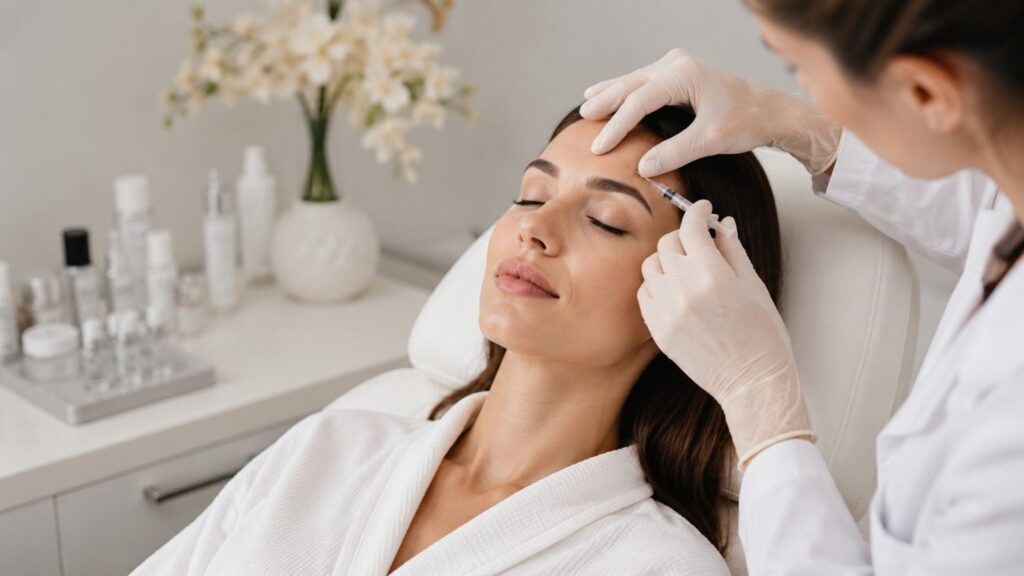
The Benefits of Botox Treatments: What You Should Know Before Booking
The benefits of Botox treatments are often discussed in relation to smoother skin and fewer visible wrinkles, but Botox is more than a simple beauty trend. It is a prescription injectable treatment that temporarily relaxes targeted muscles, helping soften expression lines caused by repeated facial movement. For many people, this creates a refreshed, calmer, and more rested appearance without surgery.
Botox is also used in medical settings for selected concerns such as chronic migraine, excessive sweating, overactive bladder, eye conditions, and muscle-related disorders. Cleveland Clinic notes that botulinum toxin injections may improve appearance by relaxing wrinkle-causing muscles and may also be used for medical concerns such as migraines, hyperhidrosis, overactive bladder, and eye problems.
That said, Botox should always be treated as a medical procedure, not a casual beauty service. The quality of the result depends heavily on the product used, the dose, the injector’s skill, and the patient’s facial anatomy. In my experience, the best Botox outcomes happen when the patient wants a natural improvement, not a completely frozen or artificial look.
This guide explains the benefits of Botox treatments in detail, including cosmetic results, medical uses, safety concerns, side effects, timelines, aftercare, and how to choose the right provider before booking an appointment.
What Are Botox Treatments?
Botox treatments involve the use of a purified form of botulinum toxin type A, most commonly known by the brand name Botox. In controlled medical doses, this injectable treatment can temporarily reduce muscle activity in targeted areas. When used for cosmetic purposes, it helps soften wrinkles linked to repeated facial movement, such as frowning, squinting, smiling, or raising the eyebrows.
Botox is not the same as a facial, skincare product, or filler. It does not exfoliate the skin, add volume, or physically fill wrinkles. Instead, it works by reducing the activity of selected muscles so the skin above those muscles appears smoother over time. This is why Botox for wrinkles is commonly used on areas such as forehead lines, frown lines, and crow’s feet.
The treatment is usually quick, but it still requires professional judgment. A skilled provider must understand facial anatomy, muscle strength, symmetry, medical history, and the patient’s goals. Using too little product may produce a weak result, while using too much or placing it poorly can cause heaviness, asymmetry, or an unnatural appearance.
For beginners, the easiest way to understand Botox is this: it helps reduce movement-related wrinkles by calming the muscles that create them. For advanced readers, Botox is best viewed as a neuromodulator treatment that needs precise placement, controlled dosing, and individualized planning.
How Botox Works in Simple Terms
Botox works by temporarily blocking communication between nerves and selected muscles. Normally, nerves send signals that tell muscles to contract. When Botox is injected into a specific muscle, it reduces that signal. As the muscle relaxes, the repeated folding of the skin becomes less intense, and the visible line can soften.
This is especially helpful for dynamic wrinkles. Dynamic wrinkles are lines that appear or deepen when you move your face. Common examples include the lines between the eyebrows when you frown, the horizontal lines across the forehead when you raise your brows, and crow’s feet that appear around the eyes when you smile or squint.
The American Academy of Dermatology explains that dermatologists inject very small amounts of purified botulinum toxin into targeted muscles on the face or neck to temporarily relax those muscles and reduce fine lines and wrinkles. The effect often lasts about three to four months, and sometimes longer.
Botox does not remove every line permanently. It works best on movement-related wrinkles, and results depend on age, skin quality, muscle strength, sun damage, lifestyle, dose, and treatment consistency.
Cosmetic Botox vs. Medical Botox
Cosmetic Botox and medical Botox use the same general type of medication, but the purpose, treatment areas, doses, and provider expertise may be different. Cosmetic Botox is used to improve visible signs of aging or facial tension. It may be recommended for frown lines, forehead lines, crow’s feet, chin dimpling, bunny lines, or other areas where muscle movement creates visible creases.
Medical Botox is used to manage certain health conditions. Cleveland Clinic lists several medical uses, including chronic migraines, excessive sweating, overactive bladder, eyelid twitching, cervical dystonia, spasticity, and other muscle-related concerns. These treatments are usually handled by qualified healthcare providers who understand the specific medical condition being treated.
The difference matters because a cosmetic injector may not be the right provider for a neurological or medical sweating condition unless they are trained and licensed for that care. Likewise, a medical Botox plan may not focus on facial beauty or symmetry.
Patients should be clear about their goal before treatment. Are they trying to soften wrinkles, reduce sweating, manage migraines, or treat a muscle concern? A proper diagnosis and consultation help ensure the treatment plan matches the real need.
Why Consultation Matters First
A Botox consultation is one of the most important steps before treatment. It gives the provider time to understand your concerns, review your medical history, study your facial movement, and explain what Botox can and cannot do. Skipping consultation often leads to poor planning and unrealistic expectations.
During a professional consultation, the provider may ask about allergies, pregnancy or breastfeeding, neuromuscular conditions, past injectable treatments, medications, previous side effects, and your desired level of movement after treatment. They may also ask you to frown, smile, squint, and raise your eyebrows so they can see how your muscles work naturally.
In my experience, consultation is where the best results begin. A patient may say, “I want Botox for my forehead,” but the real issue may involve brow position, frown muscle strength, or skin laxity. Treating one area without understanding the full face can create imbalance.
A good provider will also explain expected results, possible side effects, aftercare, product authenticity, and when to return for review. If a clinic gives injections without asking medical questions, that is a warning sign. Botox is popular, but it still requires clinical responsibility.
Main Cosmetic Benefits of Botox Treatments
The main cosmetic benefits of Botox treatments are linked to smoother expression lines, a refreshed facial appearance, and better control over wrinkles caused by repeated muscle movement. Many people choose Botox because they want visible improvement without surgery, long recovery time, or major changes to their face.
Cosmetic Botox works best when the goal is subtle refinement. It can reduce harsh frown lines that make a person look angry, soften forehead lines that make the face look tired, and improve crow’s feet that become more noticeable with smiling or squinting. These changes can make the face look more relaxed while still allowing natural expression when treatment is planned carefully.
Another reason people choose Botox is convenience. The appointment is usually short, and most people return to normal daily activities soon after treatment. The American Academy of Dermatology notes that most people can return to everyday activities immediately after botulinum toxin injections, although aftercare precautions are still important.
Botox also fits well into a broader skin and beauty plan. It can work alongside sunscreen, medical-grade skincare, chemical peels, laser treatments, microneedling, or dermal fillers when recommended by a qualified provider. However, it should not be seen as a one-size-fits-all solution. The best cosmetic outcome comes from matching the treatment to the patient’s face, age, skin condition, and long-term goals.
| Treatment Area | Primary Concern | How Botox Helps |
|---|---|---|
| Forehead lines | Horizontal forehead wrinkles | Relaxes the muscles that create forehead creases, giving the skin a smoother appearance. |
| Frown lines | Vertical lines between the eyebrows | Softens glabellar lines caused by repeated facial expressions. |
| Crow’s feet | Fine lines around the outer corners of the eyes | Reduces wrinkles that appear when smiling or squinting while maintaining natural movement. |
| Brow area | Mild brow heaviness | Can create a subtle lifting effect when appropriate muscles are treated. |
| Chin | Dimpled or uneven chin texture | Helps relax the mentalis muscle for a smoother-looking chin. |
| Jaw muscles | Jaw tension or facial slimming | Relaxes overactive jaw muscles and may reduce the appearance of a square jaw in suitable candidates. |
Softens Fine Lines and Wrinkles
One of the most well-known benefits of Botox treatments is the softening of fine lines and wrinkles. Botox is especially effective for dynamic wrinkles, which are wrinkles formed by repeated facial movement. These include forehead lines, frown lines between the eyebrows, and crow’s feet around the outer corners of the eyes.
When these muscles are repeatedly used over many years, the skin folds in the same places again and again. Over time, the lines may remain visible even when the face is relaxed. Botox helps by reducing the strength of the repeated movement, giving the skin a chance to look smoother.
This does not mean Botox erases every wrinkle. Deeper static lines, which remain visible even without movement, may need a combination approach. This may include skincare, resurfacing treatments, dermal fillers, or collagen-stimulating procedures, depending on the concern.
For many patients, the biggest improvement is not dramatic transformation. It is the softening of lines that make the face look tense, tired, or older than the person feels. A careful dose can smooth the area while still keeping normal facial expression.
Helps Prevent Lines From Looking Deeper
Another important benefit of Botox is prevention. Botox cannot stop the natural aging process, but it can reduce the repeated muscle movements that contribute to deeper expression lines. This is why some people begin Botox before lines become strongly etched into the skin.
Preventive Botox should be approached carefully. The goal is not to treat a young face aggressively. The goal is to relax overactive muscles in a balanced way so repeated folding of the skin is reduced. For example, a person who strongly frowns while concentrating may develop deep lines between the eyebrows earlier than expected. Conservative Botox may help slow that pattern.
This benefit is most useful when combined with healthy skin habits. Sunscreen, hydration, sleep, not smoking, and a suitable skincare routine all support long-term skin quality. Botox handles the movement part, but it does not replace skin health.
A professional provider should never recommend unnecessary treatment. If lines are minimal and movement is normal, skincare and sun protection may be enough. Good Botox planning should be based on need, not pressure or trends.
Gives a Refreshed, Natural-Looking Appearance
Many people worry that Botox will make them look frozen or expressionless. That concern is valid when Botox is poorly placed or overused. However, when performed by an experienced injector, Botox can create a natural-looking refreshed appearance rather than an artificial one.
The American Academy of Dermatology explains that dermatologists aim to inject just enough product to weaken and relax targeted muscles without affecting other muscles, helping patients maintain natural facial expressions. This is an important point because natural-looking Botox depends on precision, not simply the amount of product used.
A refreshed look may mean softer frown lines, a smoother forehead, less tension around the eyes, or a more rested expression in photos. The patient should still be able to smile, communicate emotion, and look like themselves.
In my experience, the best results are often noticed as, “You look well-rested,” rather than, “You had Botox.” That is usually the ideal outcome for professional patients, business owners, brides, public speakers, and anyone who wants improvement without obvious changes.
Medical Benefits of Botox Treatments
Although Botox is widely known as a cosmetic treatment, it also has important medical uses. These uses are not simply beauty-related. In some cases, Botox can improve quality of life for people dealing with chronic sweating, migraines, muscle spasms, bladder issues, or selected eye conditions.
Medical Botox works through the same basic principle of reducing nerve-muscle activity or blocking certain chemical signals. However, medical treatment plans are often more complex than cosmetic plans. The provider must understand the condition, approved uses, correct dosing, injection sites, patient risks, and follow-up schedule.
For example, Botox for chronic migraine is different from Botox for crow’s feet. Botox for excessive sweating is different from Botox for frown lines. The medication may be similar, but the treatment strategy is not. This is why patients should see the right type of healthcare professional for their concern.
The medical benefits of Botox treatments can be meaningful when other options have not provided enough relief. For some patients, the goal is not appearance but function, comfort, confidence, and daily control. A person with excessive underarm sweating may feel more comfortable at work. A person with chronic migraine may have a structured treatment plan under medical supervision.
Still, Botox is not suitable for every medical case. It requires proper diagnosis, discussion of risks, and ongoing monitoring. Patients should never self-inject or purchase products online.
Botox for Excessive Sweating
Botox may help people with hyperhidrosis, which is the medical term for excessive sweating. This condition can affect the underarms, hands, feet, face, or other areas. For many people, it is more than a small inconvenience. It can affect clothing choices, confidence, work meetings, social events, and daily comfort.
The American Academy of Dermatology states that when treating excessive sweating, a dermatologist injects botulinum toxin directly into the underarm skin, and a single treatment can provide up to six months of relief. This makes Botox a useful option for selected patients who have not found enough improvement with standard antiperspirants or other treatments.
Botox helps by reducing the signals that activate sweat glands in the treated area. It does not treat the emotional impact directly, but reducing sweat can make daily life easier for many patients.
People considering Botox for sweating should consult a qualified medical provider. The provider can confirm whether the sweating pattern is suitable for Botox and whether another medical cause should be ruled out first.
Botox for Chronic Migraine and Muscle Conditions
Botox is also used in medical care for chronic migraine and certain muscle-related conditions. Cleveland Clinic notes that Botox injections may be recommended for chronic migraines, muscle contractions, eyelid twitching, cervical dystonia, spasticity, and other concerns. These are medical treatments and should be managed by a qualified healthcare professional.
For chronic migraine, Botox is not used the same way as cosmetic Botox. The injection pattern, number of injection points, and treatment schedule are different. The goal is to reduce migraine burden under medical supervision, not to smooth facial wrinkles.
For muscle conditions, Botox may help reduce overactive muscle activity. This can be useful in selected cases involving spasms, stiffness, or involuntary movement. However, the patient must be properly assessed because muscle weakness, swallowing issues, breathing problems, and other risks may matter depending on the condition.
Medical Botox should never be promoted casually. It is a treatment that requires diagnosis, documentation, and follow-up. If a patient is seeking Botox for migraines or a muscle disorder, they should speak with a medical specialist rather than choosing a provider based only on price.
Emotional and Lifestyle Benefits
The benefits of Botox treatments can also include emotional and lifestyle improvements, especially when the treatment addresses a concern that affects confidence or daily comfort. A person with deep frown lines may feel that their face looks angry even when they are calm. A person with severe underarm sweating may avoid certain clothes, presentations, or social situations.
When Botox helps reduce these concerns, the patient may feel more at ease in daily life. This does not mean Botox creates confidence by itself, and it should never be presented as a solution to deeper self-esteem issues. However, when a specific visible or physical concern is affecting someone’s comfort, a well-planned treatment may help.
In cosmetic care, emotional benefit often comes from looking more rested and aligned with how a person feels inside. In medical care, benefit may come from better symptom control or less disruption in daily routines.
The key is realistic expectation. Botox can soften lines or reduce certain symptoms temporarily. It cannot create perfect skin, stop aging, or solve every concern. A responsible provider will explain both the benefits and the limits before treatment.
Botox Results, Timeline, and Maintenance
Botox results are temporary, which is both a benefit and a limitation. It is a benefit because patients can try treatment without making a permanent change. It is a limitation because the effect gradually fades and maintenance appointments are usually needed if the patient wants to keep the result.
Most people do not see the full effect immediately after treatment. Botox needs time to settle into its intended action. Some patients notice early softening within a few days, while others see a slower change. Cleveland Clinic states that most people notice desired effects around the third or fourth day, with full results visible within 10 to 14 days.
The timeline can vary based on the treated area, dose, product response, muscle strength, and the patient’s metabolism. First-time patients should avoid judging the final result too early. A follow-up may be recommended if the provider wants to assess symmetry or adjust future treatment planning.
Maintenance is also personal. Some people prefer treatment every three to four months. Others wait longer, especially if they want more movement between sessions. A good provider should not push unnecessary appointments. Instead, they should help the patient maintain a balanced result that supports natural expression.
The best Botox plan is not just about the first appointment. It is about safe treatment, measured results, follow-up, and long-term facial balance.
| Factor | Possible Effect on Results |
|---|---|
| Injection technique | Proper placement improves symmetry and natural-looking outcomes. |
| Muscle strength | Stronger facial muscles may require a customized treatment plan. |
| Dosage | Too little may provide limited improvement, while excessive dosing may reduce natural facial movement. |
| Treatment area | Different facial areas may respond differently and vary in how long results last. |
| Individual metabolism | Some people break down the product faster than others, affecting longevity. |
| Following aftercare instructions | Proper aftercare may help support the best possible treatment outcome. |
| Regular maintenance | Consistent treatments may help maintain smoother-looking results over time. |
When Botox Results Usually Appear
Botox does not work instantly. After injection, the product begins affecting the targeted nerve-muscle communication, but visible changes take time. Many patients notice early improvement within a few days, especially in areas such as the forehead or frown lines. However, the final result should usually be assessed closer to the 10 to 14 day mark.
This waiting period is important because facial muscles do not all respond at the same speed. One side may soften slightly before the other, or one area may feel different before the visible result appears even. This does not always mean something is wrong. It can simply be part of the normal response window.
Cleveland Clinic notes that most people notice desired effects around day three or four, with full results visible within 10 to 14 days. Patients should follow their provider’s guidance before requesting adjustments too soon.
For best results, take clear before photos, follow aftercare instructions, and wait until the recommended review time before judging the final outcome. Patience helps avoid unnecessary correction.
How Long Botox Usually Lasts
Botox results do not last forever. For cosmetic treatment, results often last about three to four months, although some people experience shorter or longer effects. The American Academy of Dermatology says the effect for fine lines and wrinkles lasts about three to four months and sometimes longer.
Several factors can affect how long results last. These include muscle strength, treatment area, dose, metabolism, lifestyle, exercise level, product response, and how often a person has had treatment before. Stronger muscles may regain movement sooner, while smaller treatment areas may maintain improvement longer.
The American Society of Plastic Surgeons also explains that Botox generally lasts three to four months, with some patients noticing shorter or longer duration. This is why maintenance schedules should be individualized.
Patients should avoid chasing a completely motionless look. A small amount of movement can look natural and healthy. The goal should be smoothness, balance, and comfort—not over-treatment. Your provider can recommend when to return based on how your face responds.
Botox Benefits and Treatment Timeline Table
Understanding the timeline helps patients know what to expect and avoid unnecessary worry. Botox is a gradual treatment, not an instant skin-smoothing filter. A clear timeline also helps patients plan around events, photoshoots, weddings, business meetings, or special occasions.
| Stage | What Usually Happens | Helpful Note |
|---|---|---|
| Consultation | Provider reviews goals, facial movement, medical history, and treatment suitability | Be honest about medications, health conditions, pregnancy, breastfeeding, and past injectable treatments |
| Treatment day | Small injections are placed into targeted areas | Treatment is usually quick, but precision matters more than speed |
| First 24 hours | Mild redness, small bumps, or tenderness may appear | Follow aftercare and avoid rubbing the treated areas |
| Days 3–4 | Early softening may begin for many people | Do not judge final results yet |
| Days 10–14 | Full cosmetic result is usually easier to assess | This is often the best time for review photos |
| Months 3–4 | Movement may gradually return | Maintenance can be planned if desired |
This timeline is a general guide, not a guarantee. A qualified provider should explain what is realistic for your face, treatment area, and personal goals.
Safety, Side Effects, and Who Should Be Careful
Botox has a strong safety record when used correctly by trained professionals, but it is still a prescription medical treatment. The word “non-surgical” does not mean risk-free. Patients should understand possible side effects, serious warning signs, and the importance of choosing a licensed provider.
Most mild side effects are related to the injection process itself. These may include temporary redness, swelling, soreness, tenderness, or bruising. Some patients may also experience headache or temporary heaviness. The American Academy of Dermatology notes that side effects tend to be mild and temporary when they occur, with bruising sometimes lasting about a week.
More serious risks are uncommon but important. FDA labeling for Botox includes a boxed warning about possible distant spread of toxin effect. Symptoms may include muscle weakness, double vision, drooping eyelids, swallowing difficulties, speech changes, urinary incontinence, and breathing difficulties. Swallowing and breathing difficulties can be life-threatening.
Safety also depends on product authenticity. Counterfeit or mishandled botulinum toxin products have caused documented harmful reactions. The CDC advises people to receive injections only when the product is obtained from an authorized supplier and the provider is licensed and trained.
Before treatment, ask questions. A professional clinic should welcome them.
Common Botox Side Effects
Common Botox side effects are usually mild, temporary, and related to the injection site. These may include redness, swelling, tenderness, soreness, bruising, or small bumps immediately after treatment. Some people may also experience a mild headache, especially after forehead or frown-line treatment.
Bruising can happen even with excellent technique because small blood vessels may be present under the skin. It does not always mean the treatment was done incorrectly. However, the risk may be higher if a person takes blood-thinning medication or supplements, so patients should discuss medication use with their provider before treatment.
Cleveland Clinic lists possible side effects such as bruising, headache, numbness, temporary eyelid droop, eyebrow droop, eyebrow asymmetry, and nausea in relation to neuromodulator injections. Most cosmetic side effects improve with time, but any unusual or severe symptom should be reported.
A good provider will explain what is normal, what is not normal, and when to seek help. Patients should never feel embarrassed to call their clinic after treatment if something feels wrong.
Serious Safety Warnings
Serious Botox complications are uncommon, but they must be discussed clearly. The FDA-approved Botox label includes a boxed warning for distant spread of toxin effect. This warning means the effect of botulinum toxin may spread beyond the injection area and cause symptoms consistent with botulinum toxin effects. Reported symptoms include generalized muscle weakness, double vision, drooping eyelids, difficulty swallowing, voice changes, speech problems, urinary incontinence, and breathing difficulties.
Patients should seek urgent medical care if they experience trouble breathing, trouble swallowing, severe weakness, slurred speech, or vision changes after treatment. These symptoms should not be ignored or treated as normal aftercare issues.
People with certain medical conditions may need extra caution. This includes patients with neuromuscular disorders, existing swallowing or breathing difficulties, weak facial muscles, or other complex health concerns. Cleveland Clinic advises that people who are pregnant, breastfeeding, or have neuromuscular disease, drooping eyelids, or weak facial muscles should not get Botox injections without proper medical guidance.
Responsible Botox care starts with screening. A quick beauty appointment without medical questions is not enough.
Avoid Counterfeit or Unlicensed Botox
One of the biggest safety risks is not Botox itself, but unsafe products and unqualified providers. Counterfeit, mishandled, or illegally sourced botulinum toxin can place patients at serious risk. This is especially concerning when injections are offered at unusually low prices, in homes, parties, salons, or settings that do not follow medical standards.
The CDC reported harmful reactions linked to counterfeit or mishandled botulinum toxin products and injections from individuals not following state or local requirements. Its investigation summary listed 17 cases, 13 hospitalizations, and no deaths, and it advises patients to ask whether the provider is licensed and trained and whether the product is FDA-approved and obtained from a reliable source.
The American Academy of Dermatology also warns against buying botulinum toxin online or receiving injections in non-medical settings such as parties, salons, or someone’s home.
Patients should ask to see product packaging if they are unsure. They should also verify provider credentials and avoid any clinic that refuses to discuss product source, risks, or aftercare.
Who Is a Good Candidate for Botox?
A good Botox candidate is someone who has a clear concern, realistic expectations, and no major medical reason to avoid treatment. Botox may be suitable for adults with movement-related wrinkles, facial tension, or selected medical concerns. However, the decision should always be made after a proper consultation.
For cosmetic patients, Botox may be helpful when lines appear during facial expression and begin to affect the overall look of the face. Someone may notice forehead lines in photos, deep frown lines during concentration, or crow’s feet that remain visible even after smiling. Botox can help soften these concerns when the lines are linked to muscle activity.
For medical patients, candidacy depends on diagnosis and treatment history. Botox for excessive sweating, chronic migraine, overactive bladder, or muscle-related concerns should be recommended by a qualified healthcare provider.
Not everyone is a good candidate. Pregnancy, breastfeeding, neuromuscular disorders, weak facial muscles, drooping eyelids, certain medication use, and previous reactions may change suitability. Cleveland Clinic notes that patients should not get Botox injections if they are pregnant, breastfeeding, or have neuromuscular disease, drooping eyelids, or weak facial muscles.
The best way to know if Botox is suitable is to book a consultation with a licensed provider who can assess your face, goals, health history, and risk factors.
Good Candidates for Cosmetic Botox
Good candidates for cosmetic Botox usually have dynamic wrinkles caused by repeated facial movement. These may include frown lines, forehead lines, crow’s feet, bunny lines, chin dimpling, or other expression-related creases. The person may feel that these lines make them look tired, stressed, older, or less approachable than they feel.
A strong candidate also understands that Botox is temporary. It can soften movement and improve the appearance of lines, but it does not permanently stop aging. Maintenance treatments may be needed to keep results.
Good candidates usually want a natural-looking improvement rather than a dramatic transformation. They are willing to follow aftercare, attend follow-up appointments if needed, and discuss their medical history honestly.
Skin quality also matters. If a person has deep static wrinkles, sun damage, skin laxity, or volume loss, Botox may only solve part of the concern. A provider may recommend combining Botox with skincare, resurfacing, fillers, or other treatments. A good candidate accepts a realistic plan rather than expecting Botox to fix everything alone.
Who Should Speak With a Doctor First
Some people should speak with a medical professional before considering Botox. This includes anyone who is pregnant, breastfeeding, planning pregnancy, has a neuromuscular disorder, has drooping eyelids, has weak facial muscles, or has a history of serious reaction to botulinum toxin products. Cleveland Clinic specifically advises caution for people who are pregnant, breastfeeding, or have neuromuscular disease, ptosis, or weak facial muscles.
Patients should also discuss all medications, supplements, allergies, previous surgeries, and past injectable treatments. This helps the provider assess bruising risk, healing concerns, and possible interactions.
People seeking Botox for medical concerns should not self-diagnose. Chronic migraine, excessive sweating, bladder symptoms, or muscle spasms require proper medical evaluation. Botox may be appropriate for some patients, but not all.
A safe provider will never rush this part. If the clinic does not ask health questions or seems more focused on selling units than understanding your situation, choose another provider. Careful screening protects both results and safety.
How to Choose the Right Botox Provider
Choosing the right Botox provider is one of the most important decisions you will make. Good results depend on medical knowledge, facial anatomy understanding, product quality, clean technique, and honest communication. A low price should never be the main reason to choose an injector.
Look for a licensed healthcare professional who has specific training in Botox injections. Ask about their experience, before-and-after photos, treatment approach, product source, emergency protocols, and follow-up process. A professional provider should explain risks clearly and should not pressure you into more treatment than you need.
The CDC advises patients to ask whether the provider is licensed and trained and whether the botulinum toxin product is FDA-approved and obtained from a reliable source. This is practical advice every patient should follow.
You should also feel comfortable during consultation. The provider should listen to your goals, assess your face in motion, and explain why they recommend certain areas. Good Botox is not just technical. It is also artistic, balanced, and patient-specific.
How to Get the Best Botox Results
Getting the best Botox results requires more than simply booking an appointment. Preparation, injector skill, product quality, facial assessment, aftercare, and follow-up all play a role. Even a high-quality product can produce poor results if it is injected incorrectly or used without a clear plan.
The first step is choosing the right provider. A trained injector will assess facial movement, muscle strength, brow position, natural asymmetry, and skin quality. This matters because every face moves differently. Two people may both ask for forehead Botox, but one may need a conservative approach because their brows sit low, while another may tolerate a stronger dose.
The second step is being honest about your goals. Tell your provider whether you want a very natural look, stronger line reduction, or a specific concern treated. Share any previous Botox experiences, including what you liked or disliked.
The third step is following instructions. The American Academy of Dermatology recommends avoiding rubbing or massaging injected areas and waiting before strenuous activity to help prevent the injected substance from spreading to areas where it is not wanted.
Finally, give the treatment time. Botox results develop gradually. Good aftercare and patience can help you judge the final outcome fairly.
Step-by-Step Botox Preparation
Preparing for Botox starts with choosing a provider who is licensed, trained, and transparent. Do not book based only on social media photos or discount pricing. Check credentials, clinic reputation, patient reviews, and whether the provider explains risks clearly.
Before treatment, share your full medical history. Tell your provider if you are pregnant, breastfeeding, have a neuromuscular condition, take blood thinners, use certain supplements, have had facial surgery, or experienced side effects from past injections. This information helps reduce risk and improve planning.
Next, define your goal. Do you want softer frown lines, a smoother forehead, less crow’s feet, or a more relaxed expression? Clear goals help the provider choose the right dose and placement.
Avoid planning Botox immediately before a major event. Since results may take days to develop and bruising is possible, give yourself enough time. Many providers recommend scheduling treatment at least two weeks before important photos or events.
Preparation is not complicated, but it is important. The better the planning, the better the chance of a balanced and natural-looking result.
What to Expect During Treatment
During a Botox appointment, the provider will usually review your goals again, assess your facial movement, clean the skin, and mark or identify injection points. You may be asked to frown, smile, squint, or raise your eyebrows so the injector can see the muscle activity clearly.
The injections are usually quick. Cleveland Clinic explains that the needles used for Botox are extremely small, and most people experience little to no discomfort, though some describe a slight pinching or stinging sensation. Some clinics may use ice or topical numbing if the patient is nervous, although many people do not need it.
After the injections, small bumps, redness, or tenderness may appear temporarily at the injection sites. This often settles quickly. The provider should give aftercare instructions before you leave.
Do not expect full results when you walk out of the clinic. Botox takes time to work. Early changes may appear within a few days, but the final result is usually better assessed after the proper waiting period.
Botox Aftercare Tips
Aftercare helps protect your result and reduce the risk of product movement or unnecessary irritation. Your provider’s instructions should always come first because aftercare can vary based on treatment area and clinical preference.
Common aftercare guidance includes avoiding rubbing, massaging, or pressing on the treated areas for a period after injection. The American Academy of Dermatology advises patients not to rub or massage the injected areas and to wait before strenuous physical activity. This is especially important because pressure or heavy activity too soon may increase the chance of unwanted spread.
Patients should also avoid judging results too early. The face may look unchanged for the first day or two. That is normal. Take note of any unusual symptoms, but allow the treatment time to develop.
Call your provider if you notice severe headache, vision changes, trouble swallowing, trouble breathing, marked weakness, or symptoms that feel concerning. Mild redness or bruising is different from serious warning signs. A responsible clinic will explain both.
Botox vs. Other Anti-Aging Treatments
Botox is a powerful option for movement-related wrinkles, but it is not the only treatment available. Understanding how Botox compares with fillers, skincare, and surgery helps patients make better decisions. Many poor outcomes happen when the wrong treatment is used for the wrong concern.
Botox relaxes targeted muscles. Dermal fillers restore or add volume. Skincare improves skin health and surface quality. Laser treatments may improve texture, pigmentation, or collagen response. Surgery may address significant skin laxity or structural aging. Each option has a different role.
This is why a professional consultation should not begin with “How many units do you want?” It should begin with “What concern are we trying to treat?” A line caused by muscle movement may respond well to Botox. A fold caused by volume loss may need filler. Loose skin may need a different approach entirely.
For SEO and patient education, this distinction is important. People often search for Botox because they want to look younger, but their actual concern may not be best treated with Botox alone. A helpful article should explain this clearly rather than oversell one treatment.
The benefits of Botox treatments are strongest when Botox is used for the right reason: softening dynamic lines and reducing overactive muscle movement.
Botox vs. Dermal Fillers
Botox and dermal fillers are both injectable treatments, but they work in very different ways. Botox relaxes targeted muscles to reduce movement-related wrinkles. Dermal fillers add or restore volume under the skin. Cleveland Clinic explains that Botox temporarily paralyzes muscles to reduce wrinkles, while dermal fillers add volume and help retain moisture.
This means Botox is commonly used for frown lines, forehead lines, and crow’s feet. Fillers are more often used for cheeks, lips, smile lines, jawline shaping, under-eye hollows, or areas where volume has been lost.
Some patients need one treatment. Others may benefit from both. For example, Botox may soften frown lines, while filler may restore cheek volume. The best plan depends on anatomy, age, skin quality, and personal goals.
Patients should avoid asking for a treatment just because it is popular online. A professional provider should explain whether the concern is caused by muscle movement, volume loss, skin texture, or laxity. Once the cause is clear, the treatment choice becomes safer and more effective.
Botox vs. Skincare
Botox and skincare support different parts of facial aging. Botox targets muscle movement. Skincare supports the skin barrier, hydration, texture, pigmentation, and protection from environmental damage. One does not fully replace the other.
For example, sunscreen helps protect against UV-related aging. Retinoids may improve skin texture and support collagen over time. Moisturizers help maintain barrier function. Brightening ingredients may reduce uneven tone. Botox, however, works on the muscle activity that creates expression lines.
A person with strong forehead movement may use excellent skincare and still develop horizontal lines because the muscle continues folding the skin. On the other hand, a person who gets Botox but ignores sun protection may still develop pigmentation, rough texture, and skin laxity.
The best anti-aging approach often combines both. Botox can soften dynamic wrinkles, while skincare helps improve the quality of the skin itself. In my experience, patients who maintain a simple, consistent skincare routine often enjoy better overall aesthetic results than those who rely on injectables alone.
Botox vs. Surgery
Botox is non-surgical, temporary, and best suited for selected wrinkles caused by muscle activity. Surgery is more invasive and may be used for structural concerns such as loose skin, sagging tissue, eyelid heaviness, or deeper facial aging. These are very different levels of treatment.
A facelift, brow lift, or eyelid surgery can address concerns that Botox cannot fully correct. For example, if a person has significant upper eyelid skin laxity or brow heaviness, Botox may offer only limited improvement and could even worsen heaviness if placed poorly. A surgical consultation may be more appropriate in such cases.
Botox may still be useful before or after surgery, depending on the patient’s plan and provider’s recommendation. It can help manage expression lines while surgery addresses structural aging. However, patients should not expect Botox to lift loose skin the way surgery can.
The advantage of Botox is that it is quick, temporary, and does not require surgical recovery. The limitation is that it cannot replace procedures designed for deeper tissue repositioning or skin removal.
Frequently Asked Questions
People often have similar questions before booking Botox for the first time. They want to know whether Botox is safe, how long it lasts, whether it hurts, and whether results can look natural. These questions are important because Botox should never be booked without understanding the treatment, the expected outcome, and the possible risks.
A helpful FAQ section should answer real patient concerns in simple language while still being medically responsible. Botox is common, but it is not risk-free. It is a prescription injectable product that should be used by trained, licensed professionals in a proper clinical setting.
The following answers are written for people who are researching Botox for wrinkles, facial lines, excessive sweating, or general aesthetic improvement. They are not a replacement for a personal medical consultation. Your own suitability depends on your health history, facial anatomy, treatment goals, and the provider’s assessment.
If you are unsure whether Botox is right for you, the safest next step is to speak with a qualified provider who can review your concerns in person. This is especially important if you are pregnant, breastfeeding, have a medical condition, take regular medication, or have had past reactions to injectable treatments.
What are the main benefits of Botox treatments?
The main benefits of Botox treatments include softer facial wrinkles, reduced frown lines, smoother forehead lines, less visible crow’s feet, and a more relaxed facial appearance. Botox can help reduce the muscle activity that causes dynamic wrinkles, which are lines created by repeated expression.
Botox may also have medical benefits in selected cases. Cleveland Clinic notes that Botox injections may be used for concerns such as chronic migraines, hyperhidrosis, overactive bladder, and eye problems. This means Botox is not only a cosmetic option, although cosmetic use is one of the most common reasons people ask about it.
The best benefit is usually subtle improvement. Botox should not make the face look stiff or unnatural when performed correctly. A skilled injector can soften strong muscle movement while helping the patient keep normal expression and facial balance.
How long do Botox results last?
Botox results are temporary. For cosmetic treatment, results commonly last about three to four months, although the exact duration varies from person to person. The American Academy of Dermatology states that the effect for fine lines and wrinkles lasts about three to four months and sometimes longer.
Some people metabolize Botox faster, while others maintain results longer. Factors such as treatment area, dose, muscle strength, lifestyle, exercise habits, and previous treatment history may affect duration. Strong frown muscles, for example, may regain movement sooner than smaller or weaker muscles.
Patients should not schedule maintenance only by the calendar. It is better to monitor movement and appearance, then return when lines or symptoms begin to come back. A provider can help create a safe schedule that avoids both under-treatment and over-treatment.
Is Botox only for wrinkles?
No, Botox is not only for wrinkles. While Botox is widely known for cosmetic wrinkle reduction, it also has medical uses. Cleveland Clinic lists medical uses such as chronic migraines, excessive sweating, overactive bladder, eye problems, muscle contractions, spasticity, and cervical dystonia.
That said, each use requires the right provider and treatment plan. Botox for crow’s feet is not performed the same way as Botox for chronic migraine. The injection sites, dosing strategy, expected results, and follow-up schedule may all be different.
Patients should avoid assuming that any Botox provider can treat every Botox-related concern. Cosmetic Botox should be performed by someone trained in facial aesthetics, while medical Botox should be managed by a healthcare professional familiar with the specific condition. Proper diagnosis and safe technique matter in both cases.
Is Botox safe?
Botox can be safe when administered by a licensed and trained healthcare professional using an approved product from a reliable source. Cleveland Clinic states that Botox is generally safe when administered by a licensed healthcare provider. However, safe does not mean risk-free.
FDA labeling includes a boxed warning about possible distant spread of toxin effect, with serious symptoms such as swallowing or breathing difficulties reported in some cases. This is why medical screening and proper dosing are important.
Safety also depends on avoiding counterfeit products and unlicensed injectors. The CDC advises patients to ask whether the provider is licensed and trained and whether the product is FDA-approved and obtained from a reliable source. If a deal seems suspiciously cheap or the setting feels unprofessional, do not proceed.
Does Botox hurt?
Most people describe Botox as mildly uncomfortable rather than painful. The needles used for Botox injections are very small, and treatment is usually quick. Cleveland Clinic notes that most people experience little to no discomfort, although some describe a slight pinching or stinging sensation.
Discomfort can vary depending on the treatment area, personal sensitivity, and anxiety level. Some patients are more sensitive around the eyes or forehead. If you are nervous, ask your provider whether they use ice, vibration, or topical numbing to make the treatment more comfortable.
After treatment, there may be mild tenderness, redness, or small bumps at the injection sites. These usually settle quickly. Bruising is possible, especially if a small blood vessel is touched. A professional provider should explain what is normal and when to contact the clinic.
Can Botox look natural?
Yes, Botox can look natural when it is planned and injected carefully. Natural-looking Botox depends on correct dose, proper placement, facial anatomy knowledge, and a clear understanding of the patient’s goals. The aim should be to soften lines while keeping expression.
The American Academy of Dermatology explains that dermatologists aim to relax targeted muscles without affecting other muscles, allowing patients to maintain natural facial expressions. This is the difference between a balanced result and an overdone one.
Patients can help by explaining exactly what they want. If you want to keep eyebrow movement or avoid a frozen look, say that clearly during consultation. A conservative first treatment is often a smart choice for beginners. More can be added later if appropriate, but over-treatment is harder to correct quickly.
What should I avoid after Botox?
After Botox, follow your provider’s specific aftercare instructions. General advice often includes avoiding rubbing or massaging the treated areas, applying pressure, or doing strenuous exercise too soon after treatment. The American Academy of Dermatology advises patients not to rub or massage injected areas and to wait before strenuous physical activity.
You should also avoid judging your results too early. Botox takes time to work, and full results may not be visible for 10 to 14 days. Taking photos before treatment and again after two weeks can help you compare more accurately.
Contact your provider or seek urgent care if you experience serious symptoms such as difficulty breathing, difficulty swallowing, severe weakness, drooping eyelids with vision problems, or slurred speech. These are not normal cosmetic aftercare symptoms and should be taken seriously.
Conclusion
The benefits of Botox treatments include smoother expression lines, softer wrinkles, a refreshed appearance, and possible medical relief for selected concerns such as excessive sweating, chronic migraine, and certain muscle-related conditions. Botox can be a valuable treatment when it is used correctly, but it should always be approached with realistic expectations and proper medical care.
For cosmetic patients, Botox works best on dynamic wrinkles caused by repeated facial movement. It can soften frown lines, forehead lines, and crow’s feet while helping the face look more rested. For medical patients, Botox may support symptom control when prescribed and managed by the right healthcare professional.
The most important point is safety. Choose a licensed, trained provider. Ask about product authenticity. Avoid counterfeit or unusually cheap injections. Do not receive Botox in non-medical settings such as parties, homes, or salons. The CDC and American Academy of Dermatology both warn against unsafe products and unqualified injection settings.
When planned well, Botox does not have to look obvious. It can create subtle, natural-looking improvement that supports confidence while preserving expression.