
The Role of Laser Treatments in Skin Care
The role of laser treatments in skin care has expanded significantly as dermatology technology has become more precise and adaptable. Today, laser and light-based procedures may be used to improve skin texture, soften certain acne scars, reduce visible facial vessels, address selected pigmentation, stimulate collagen production, remove damaged surface tissue, and reduce unwanted hair. These procedures can reach structures within the skin that ordinary cleansers, moisturizers, or topical serums cannot directly target.
However, the term “laser treatment” covers many different technologies. Each device has a specific wavelength, treatment depth, pulse duration, and intended target. A resurfacing laser used for wrinkles does not work in the same way as a vascular laser used for redness, and neither should automatically be considered appropriate for pigment concerns or hair reduction.
Successful treatment begins with an accurate diagnosis. A brown mark, for example, could represent sun damage, post-inflammatory hyperpigmentation, melasma, a mole, or another condition requiring medical assessment. Treating the wrong condition with the wrong device may lead to poor results or complications.
Patients should therefore view laser procedures as part of a professionally planned skin care strategy rather than as a quick cosmetic fix. The most effective plans combine appropriate technology with sun protection, medical treatment when necessary, realistic expectations, careful preparation, and structured aftercare.
This guide explains how laser skin treatment works, which concerns it may improve, how major technologies differ, what recovery involves, and how to select a qualified provider.
Understanding How Laser Skin Treatments Work
Laser skin treatments work through the controlled delivery of light energy. The word “laser” describes a focused beam with particular physical properties, but the clinical effect depends on how that energy interacts with the skin. A dermatologist selects a device based on the structure that needs to be treated, the depth of that structure, and the amount of heat or tissue disruption that can be delivered safely.
The skin contains several potential targets. Water is abundant in skin tissue and is commonly targeted during resurfacing procedures. Melanin provides colour in the skin and hair, making it relevant to pigment treatment and hair reduction. Hemoglobin is found in blood and may be targeted when treating visible vessels or certain redness-related concerns. These light-absorbing targets are often called chromophores.
Treatment effectiveness also depends on pulse duration, spot size, cooling, energy level, and the number of passes made over the skin. These variables influence how deeply the energy travels and how much heat accumulates in the treatment area. A skilled clinician adjusts them according to the patient’s diagnosis, skin tone, treatment history, and response during the session.
It is also important to understand that visible improvement usually develops through healing rather than occurring instantly. Some treatments remove damaged surface tissue, while others trigger controlled thermal injury that stimulates repair and collagen remodeling over time. This is why final results may take weeks or months to become clear.
How Laser Energy Targets the Skin
Laser energy works through selective absorption. A particular wavelength is chosen because it is more readily absorbed by a target such as water, melanin, or hemoglobin. When the target absorbs the energy, it converts that light into heat. The resulting thermal effect can vaporize tissue, coagulate a vessel, fragment pigment, or damage a hair follicle, depending on the device and treatment goal.
Resurfacing lasers often target water within skin cells. By removing or heating controlled layers of tissue, they can encourage the body to replace damaged skin and reorganize collagen. Pigment-focused devices target melanin, while vascular lasers direct energy toward hemoglobin within blood vessels. Hair-reduction lasers also depend on melanin, but the aim is to heat the follicle sufficiently to reduce future growth.
Precision does not mean that surrounding tissue is completely unaffected. Heat can spread beyond the intended target, especially when settings are too aggressive or the skin contains more competing pigment. Cooling systems, test spots, pulse control, and conservative treatment planning help reduce this risk.
The FDA describes medical lasers as devices that use precisely focused light to treat or remove tissue. However, safe results depend not only on the device but also on accurate diagnosis, appropriate settings, protective measures, and operator training.
Laser Treatment Versus IPL
Laser treatment and intense pulsed light are often discussed together, but they are not the same technology. A laser generally emits a more specific wavelength or narrow range of wavelengths. Intense pulsed light, commonly called IPL, produces broad-spectrum light that can be filtered to target different ranges.
This difference affects how each technology is used. Certain lasers are designed for a specific target, such as a blood vessel, pigment particle, water-containing tissue, or hair follicle. IPL may be used more broadly for selected combinations of redness, sun-related pigmentation, and hair reduction, depending on the system and filter settings.
Neither option is automatically better. The correct choice depends on the condition, skin tone, treatment area, and desired depth. A person with visible facial vessels may benefit from a vascular laser or an appropriate IPL system, while someone seeking deeper resurfacing would require a different technology entirely.
Skin tone is particularly important because melanin can absorb light energy. Poorly selected IPL settings may create a higher risk of burns or pigment changes in some patients. Lasers can also cause complications when used incorrectly.
Johns Hopkins Medicine notes that IPL is a light-based procedure rather than a true laser. Patients should ask which device is being recommended, what it targets, and why it is considered suitable for their skin.
Related Articles
Why the Role of Laser Treatments in Skin Care Matters
The role of laser treatments in skin care matters because lasers can address structural concerns that are difficult to change with topical products alone. Daily skin care remains essential for cleansing, moisturising, sun protection, acne control, and long-term maintenance. However, creams and serums generally cannot remove damaged skin layers, close a visible blood vessel, or precisely heat a deep scar in the way a professional device can.
Laser treatment also gives clinicians a high level of control. Depending on the technology, treatment depth and intensity can be adjusted to create a mild procedure with limited downtime or a more aggressive resurfacing treatment with a longer recovery period. This flexibility allows care to be tailored to the severity of the concern, the patient’s schedule, and the acceptable level of risk.
Another important benefit is the ability to target different components of a skin condition. Acne scarring may involve uneven texture, tethered tissue, enlarged pores, and post-inflammatory colour changes. Rosacea may involve background redness, visible vessels, inflammatory bumps, and sensitivity. A treatment plan may therefore combine laser therapy with medication, injectables, scar-release procedures, or consistent home care.
Laser treatment should not be viewed as a replacement for diagnosis. Conditions such as melasma, active acne, rosacea, suspicious pigmented lesions, infections, or inflammatory skin disorders may require medical management before any energy-based procedure is considered.
When used appropriately, lasers can support meaningful improvement. When used without proper assessment, they may worsen pigment, cause burns, or produce disappointing results.
| Skin Concern | Most Suitable Laser Category | Primary Treatment Goal | Important Consideration |
|---|---|---|---|
| Fine lines and wrinkles | Ablative or Fractional Laser | Stimulate collagen and smooth skin texture | Recovery time varies depending on treatment depth |
| Acne scars | Fractional Laser | Improve scar appearance and skin texture | Multiple sessions may be required |
| Sun damage | Ablative or Non-Ablative Laser | Reduce damaged skin and improve tone | Daily sun protection is essential after treatment |
| Hyperpigmentation | Pigment-Targeting Laser | Break down excess melanin | Device selection depends on skin tone |
| Facial redness | Vascular Laser | Reduce visible blood vessels and redness | Often combined with rosacea management |
| Unwanted hair | Laser Hair Reduction System | Damage hair follicles for long-term reduction | Hair and skin color affect treatment effectiveness |
Improving Texture, Fine Lines, and Acne Scars
Laser skin resurfacing can improve texture by creating controlled injury within the epidermis, dermis, or both. During healing, damaged tissue is replaced, and collagen fibres may reorganize. This process can soften fine lines, reduce roughness, improve certain enlarged pores, and make the skin appear smoother and more even.
Acne scars require a more individualized approach. Not all scars have the same structure. Rolling scars may be caused by fibrous bands that pull the skin downward, boxcar scars have sharper edges, and ice-pick scars extend deeply into the skin. Raised scars behave differently from depressed scars and may not be suitable for the same laser approach.
Fractional resurfacing can be useful for selected depressed acne scars because it creates microscopic columns of controlled injury. However, deeper tethered scars may also require subcision, while narrow ice-pick scars may respond better to other techniques. Active acne should be controlled to reduce the risk of continued scarring.
Laser resurfacing can also support collagen remodeling around fine lines, especially in sun-damaged skin. Results are usually described as improvement rather than complete removal. Mayo Clinic notes that resurfacing may be used for fine wrinkles, uneven texture, sun-damaged skin, age spots, and mild to moderate acne scars.
Understanding the broader benefits of laser treatment can also help patients set realistic expectations before discussing personalized options with a qualified dermatologist.
Treating Pigment, Redness, and Visible Vessels
Laser and light-based devices can be useful for selected pigmentation and vascular concerns, but diagnosis is especially important in this category. Brown spots may result from sun exposure, post-inflammatory hyperpigmentation, freckles, melasma, or other conditions. These concerns do not respond equally to the same device, and some may worsen when treated aggressively.
Pigment-targeting lasers deliver energy that is absorbed by melanin. The pigment may break into smaller particles that the body gradually clears. Temporary darkening, crusting, or redness can occur as the area heals. Strict sun protection is important because ultraviolet exposure can encourage pigmentation to return.
Vascular devices target hemoglobin within blood vessels. Controlled heating can cause selected vessels to collapse and become less visible. These treatments may be used for facial vessels, certain red marks, or persistent redness associated with rosacea.
Rosacea usually requires more than a laser procedure. Trigger management, gentle skin care, sun protection, and prescription treatment may be necessary to control inflammation. Lasers and light devices are often most helpful for visible vessels or persistent background redness rather than every rosacea symptom.
The American Academy of Dermatology explains that laser or light treatment may be included when rosacea causes visible blood vessels or thickened skin. Patients should expect a customised plan rather than a single universal treatment.
Main Types of Laser and Light-Based Skin Treatments
Laser and light-based skin treatments can be organised according to how they affect the tissue. Some remove the outer layers of skin, some heat deeper structures while leaving much of the surface intact, and others target a particular colour or biological structure. Understanding these categories makes it easier to compare expected results, downtime, and potential risks.
Ablative resurfacing is generally the most intensive category. It removes surface tissue and creates a more significant wound-healing response. Non-ablative treatment works beneath the surface and often requires less recovery, although results may develop more gradually. Fractional delivery can be either ablative or non-ablative. It treats microscopic columns while leaving surrounding areas untreated, which may support faster healing.
Pigment, vascular, and hair-reduction devices are selected according to their target rather than their resurfacing depth. These systems may produce only limited surface disruption, but they can still cause swelling, redness, blistering, or pigment changes when used incorrectly.
IPL is included in many clinic treatment menus even though it is not technically a laser. It uses filtered broad-spectrum light and may address selected pigmentation, redness, or unwanted hair.
No treatment category is universally superior. A stronger treatment may create greater improvement in one session but also involve more discomfort, risk, and downtime. A milder treatment may fit a patient’s schedule better but require multiple sessions. The comparison below provides a general overview rather than a guarantee of individual results.
| Treatment category | Main action | Common uses | Typical recovery pattern |
|---|---|---|---|
| Ablative resurfacing | Removes the outer skin layer and heats deeper tissue | Deeper wrinkles, texture, selected scars, and sun damage | Longer downtime and more intensive wound care |
| Non-ablative resurfacing | Heats deeper skin while largely preserving the surface | Fine lines, mild scarring, tone, and texture | Less downtime with gradual results |
| Fractional treatment | Creates microscopic treatment columns | Scars, wrinkles, texture, and selected pigmentation | Recovery varies by depth and whether treatment is ablative |
| Vascular or pigment-targeting treatment | Directs energy toward hemoglobin or melanin | Visible vessels, redness, and selected brown spots | Local redness, swelling, crusting, or darkening may occur |
| IPL | Uses filtered broad-spectrum pulsed light | Selected redness, sun-related pigmentation, and hair reduction | Often limited downtime, although suitability varies |
Ablative Laser Resurfacing
Ablative laser resurfacing removes controlled portions of the skin surface while delivering heat into deeper tissue. This creates a stronger wound-healing response than most non-ablative procedures. Carbon dioxide and erbium-based systems are common examples, although treatment characteristics vary between devices.
The main advantage of ablative resurfacing is its ability to address more pronounced texture problems, deeper wrinkles, selected acne scars, and significant sun damage. Because the treatment is more intensive, one session may create a more noticeable change than a mild non-ablative procedure.
The trade-off is a longer and more demanding recovery. Patients may experience swelling, oozing, crusting, peeling, tenderness, and marked redness. The treated skin needs careful cleansing and protection while the surface repairs itself. Redness can remain visible after the initial wound has closed.
Ablative treatment also carries risks such as infection, scarring, acne flares, milia, prolonged redness, and pigment changes. These risks may be higher in patients with certain medical histories or skin characteristics.
Mayo Clinic explains that new skin generally covers the treated area within approximately seven to ten days after ablative resurfacing, although complete recovery takes longer. Patients should plan for follow-up care and avoid treating the procedure as a minor facial service.
Non-Ablative and Fractional Lasers
Non-ablative lasers heat tissue below the skin surface without removing the entire outer layer. Because the epidermis remains more intact, recovery is usually easier than with aggressive ablative resurfacing. Patients may experience temporary redness, swelling, dryness, or mild sensitivity rather than an open wound.
These treatments are commonly selected for fine lines, mild textural irregularity, early sun damage, enlarged pores, and selected acne scars. Improvement develops gradually as collagen remodeling occurs. Several sessions may be recommended because each treatment is designed to create a controlled effect without extensive tissue removal.
Fractional technology divides the laser beam into microscopic treatment zones. Rather than treating the whole surface evenly, the device creates narrow columns of controlled injury surrounded by untreated tissue. These surrounding areas can support faster repair.
Fractional treatment may be ablative or non-ablative. Fractional ablative devices remove microscopic columns of tissue and can create stronger resurfacing. Fractional non-ablative systems heat columns beneath the surface with less visible disruption.
The term “fractional” should not be interpreted as meaning risk-free. Treatment depth, density, energy, skin tone, and the number of passes still influence safety. Mayo Clinic notes that non-ablative and fractional treatments may require multiple sessions, particularly when the goal is gradual improvement with reduced downtime.
Pigment, Vascular, and Hair-Reduction Devices
Pigment, vascular, and hair-reduction devices are designed around specific light-absorbing targets. Pigment-focused lasers target melanin, vascular lasers target hemoglobin, and hair-reduction devices aim to heat melanin within hair follicles. The clinical goal determines the wavelength, pulse duration, energy level, and cooling method.
Pigment treatment may be considered for freckles, sun spots, or certain post-inflammatory marks. However, not every brown area should be treated with a laser. Melasma, suspicious lesions, and deeper pigmentation require careful assessment because treatment may fail or worsen the condition.
Vascular devices can reduce selected facial vessels, red marks, and persistent redness. Several sessions may be needed because vessels differ in size, depth, and colour. Temporary bruising, swelling, or redness can occur depending on the device.
Laser hair reduction works best when there is sufficient contrast between hair pigment and surrounding skin, although modern systems may be suitable for a broader range of skin tones when used by experienced professionals. Results are described as long-term reduction rather than guaranteed permanent removal of every hair.
The same device is not appropriate for every target. The FDA explains that medical lasers use precisely focused light to treat tissue, but the device must still be matched correctly to the intended use, patient, and treatment area.
What to Expect Before, During, and After Treatment
A successful laser procedure involves more than the treatment session itself. Preparation, clinical assessment, protective measures, and aftercare all influence the final result. Patients should receive clear instructions before booking and should understand how the procedure fits into their wider skin care or medical plan.
The consultation should begin with a diagnosis. The provider should examine the skin, review the patient’s concerns, and explain whether a laser is likely to help. A responsible clinician may recommend postponing treatment when the skin is tanned, irritated, infected, inflamed, or affected by uncontrolled acne or another active condition.
Medical history also matters. Previous cold sores, abnormal scarring, pigment problems, immune conditions, pregnancy, recent procedures, prescription medicines, and supplements may affect treatment decisions. Patients should provide complete information rather than assuming that a medication or health condition is irrelevant.
During treatment, eye protection, hygiene, cooling, and pain-control measures should be appropriate for the device. The patient should understand what sensations are expected and how the skin may look immediately afterward.
Recovery instructions should be provided in writing. The recommended routine may differ significantly between mild non-ablative treatment and aggressive ablative resurfacing. Patients should know which products to use, which activities to avoid, when they may apply makeup, and which symptoms require urgent medical attention.
Treating the entire process seriously improves safety and helps prevent avoidable complications.
Preparing for a Laser Procedure
Preparation begins with an honest discussion about medical history, skin behaviour, and treatment goals. Patients should tell the clinician about prescription medicines, over-the-counter products, supplements, previous cosmetic procedures, pregnancy, breastfeeding, cold sores, keloid scars, abnormal pigmentation, and recent tanning.
Sun exposure is especially important. Tanned skin contains increased melanin, which may absorb more laser energy and increase the risk of burns or pigment changes. Patients may be advised to avoid direct sun and use broad-spectrum sunscreen consistently before treatment.
The clinician may recommend pausing certain irritating products, such as retinoids or exfoliating acids, for a specified period. However, patients should not stop prescription medicines unless the prescribing professional approves the change. Some individuals with a history of herpes simplex may receive preventive antiviral medication before resurfacing around the mouth.
Smoking may interfere with healing, so the provider may recommend stopping before and after an intensive procedure. The skin should also be free from active infection, severe irritation, or uncontrolled inflammation.
One thing I recommend checking before treatment is whether the provider has given clear, written instructions. The American Academy of Dermatology advises patients to disclose medicines and skin care products and to follow sun-protection recommendations. Good preparation should reduce uncertainty rather than leave the patient guessing.
What Happens During the Session
The exact treatment process depends on the device, treatment area, and intended depth. Most sessions begin with cleansing the skin and removing makeup, oil, or topical products. Protective eyewear is essential because laser and intense light energy can damage the eyes.
Pain-control methods vary. A mild treatment may require only cooling or topical numbing cream. More aggressive resurfacing may involve local anaesthesia, nerve blocks, sedation, or treatment in a surgical setting. Patients should understand who will administer anaesthesia and what monitoring will be used.
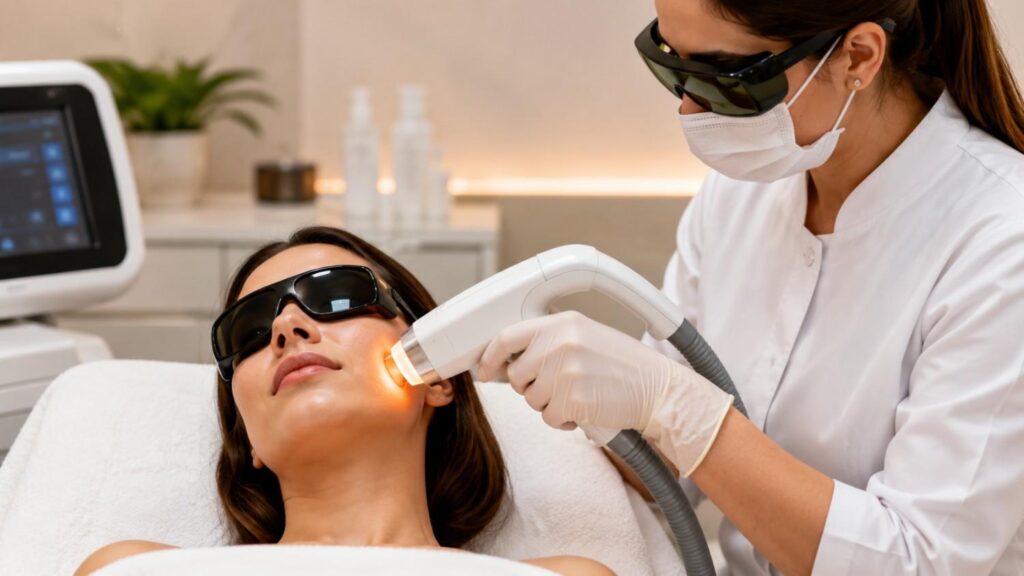
During the session, the provider positions the handpiece over the skin and delivers controlled pulses. The sensation may feel warm, sharp, prickly, or similar to brief snaps. Cooling air, chilled contact surfaces, or other cooling systems may reduce discomfort and protect the epidermis.
The clinician adjusts energy, pulse duration, spot size, density, and the number of passes. These settings influence treatment depth and heat distribution. Experienced providers also observe immediate clinical endpoints, such as redness, whitening, vessel response, or tissue change.
Mayo Clinic notes that the method of anaesthesia and treatment environment depend on how extensive the resurfacing procedure is. Patients should never assume that a device name alone tells them how aggressive the session will be.
Building a Post-Laser Skin Care Routine
Post-laser skin care should protect the healing barrier, reduce irritation, and lower the risk of infection or pigmentation. The routine depends on whether the procedure left the surface intact or created an open wound.
After mild non-ablative treatment, the provider may recommend gentle cleansing, a fragrance-free moisturizer, cool compresses, and broad-spectrum sunscreen. After ablative resurfacing, patients may need prescribed ointment, frequent cleansing, dressings, or a specific wound-care schedule.
Active ingredients should not be restarted too early. Retinoids, exfoliating acids, scrubs, fragranced products, and strong acne treatments can irritate healing skin. Makeup may also need to be avoided until the surface has recovered. The clinician should provide a timeline based on the procedure rather than a generic rule.
Sun protection is critical because recently treated skin is more vulnerable to ultraviolet damage and post-inflammatory hyperpigmentation. Hats, shade, and a suitable broad-spectrum sunscreen should become part of the recovery plan.
Patients should avoid picking peeling skin or crusts. Removing them prematurely may delay healing and increase the risk of marks or scarring.
Medical advice is needed when pain worsens, redness spreads, pus appears, blisters develop, fever occurs, or the skin changes colour unexpectedly. These symptoms should not be managed only through online advice.
Benefits, Results, and Realistic Limitations
Laser treatment can produce meaningful improvements, but professional guidance should always balance potential benefits with realistic limitations. The strongest treatment is not automatically the best treatment, and a dramatic before-and-after image does not guarantee that another patient will achieve the same result.
The benefits of laser treatment for skin depend on the condition being treated. Resurfacing devices may improve texture, fine lines, sun damage, and selected scars. Vascular systems may reduce visible vessels and persistent redness. Pigment devices may lighten certain spots, while hair-reduction lasers can decrease unwanted growth over a series of sessions.
Results also depend on the treatment depth and healing response. Ablative resurfacing may produce a more noticeable improvement after one procedure, but it requires more downtime and carries greater risk. Non-ablative treatment may fit more easily into a patient’s routine, although several sessions and gradual improvement should be expected.
Maintenance is another important consideration. Laser treatment does not stop ageing, prevent new sun damage, permanently control every pigment disorder, or replace daily skin care. Continued ultraviolet exposure can create new spots and accelerate collagen breakdown. Rosacea, acne, and melasma may also recur because the underlying condition remains active.
A good provider should define success in practical terms. The aim may be softer scars, smoother texture, fewer vessels, or reduced hair growth rather than complete elimination. Clear expectations help patients evaluate treatment value more accurately.
| Treatment Factor | Why It Matters | Impact on Results |
|---|---|---|
| Skin Type | Determines laser suitability and settings | Reduces risk of pigmentation issues |
| Skin Condition | Different concerns require different laser technologies | Improves treatment accuracy |
| Laser Type | Each device targets a specific chromophore | Produces more predictable outcomes |
| Provider Experience | Correct device selection and technique improve safety | Helps minimize complications |
| Number of Sessions | Some conditions respond gradually | Better long-term improvement |
| Post-Treatment Care | Proper aftercare supports healing | Enhances results and reduces side effects |
| Sun Protection | Prevents new pigmentation and skin damage | Helps maintain treatment benefits |
| Overall Skin Health | Healthy skin heals more efficiently | Supports faster recovery and consistent results |
Potential Benefits of Laser Skin Rejuvenation
Laser skin rejuvenation may improve several visible signs of ageing and environmental damage. Resurfacing procedures can remove damaged surface tissue, encourage epidermal renewal, and stimulate collagen remodeling in the dermis. This may lead to smoother texture, softer fine lines, more even tone, and reduced visibility of selected scars.
One major advantage is customisation. A dermatologist can choose a treatment depth and intensity based on the patient’s concern, skin tone, and recovery preferences. Some patients may benefit from a mild series with limited downtime, while others may choose a stronger procedure for more pronounced textural damage.
Laser technology can also target concerns that are difficult to address through products. A moisturizer can improve dryness and temporarily soften fine lines, but it cannot close a visible blood vessel. A brightening cream may gradually reduce some discolouration, but a correctly selected device may target a specific pigmented lesion more directly.
Results often continue to develop after the initial healing period because collagen remodeling takes time. Patients may notice progressive improvement over several weeks or months.
Mayo Clinic explains that resurfacing results may last for years, although the natural ageing process and future sun damage continue. Long-term benefits therefore depend on daily sunscreen, appropriate home care, and maintenance treatment when clinically justified.
For a broader overview of treatment expectations, recovery, and candidacy, this guide to laser skin resurfacing provides additional patient-focused information that complements professional medical advice.
What Laser Treatments Cannot Do
Laser treatments have important limitations. They cannot make the skin permanently flawless, stop biological ageing, or guarantee complete removal of every scar, wrinkle, vessel, or pigmented spot. Marketing language that promises perfect or permanent results should be approached cautiously.
Resurfacing may improve fine lines and texture, but it does not replace a facelift when significant skin laxity or deeper tissue sagging is present. Laser treatment may soften acne scars, but deep tethered or narrow scars often require additional procedures. Pigment treatment may lighten sun spots, but melasma can return or worsen because it is influenced by hormones, heat, inflammation, and ultraviolet exposure.
A laser also cannot compensate for an incorrect diagnosis. Treating a suspicious pigmented lesion cosmetically without medical assessment could delay appropriate care. Similarly, persistent redness caused by rosacea may require medication and trigger management in addition to light-based treatment.
Results vary according to genetics, age, skin tone, medical history, treatment settings, aftercare, and sun exposure. Some patients respond strongly, while others achieve only modest improvement.
Mayo Clinic notes that laser resurfacing is not suitable for every concern or every patient. A trustworthy consultation should include alternatives, expected limitations, and the possibility that no laser treatment is the safest recommendation.
Risks, Skin Tone Considerations, and Provider Selection
Safety should be central to every discussion about the role of laser treatments in skin care. These procedures intentionally deliver heat or controlled injury, which means side effects are possible even when treatment is performed correctly. The likelihood and severity of complications depend on the device, treatment depth, skin tone, medical history, treatment area, settings, and quality of aftercare.
Temporary redness, swelling, sensitivity, dryness, and peeling are common after many procedures. More aggressive resurfacing may also cause oozing, crusting, and prolonged redness. These expected effects should be explained before treatment so the patient can plan appropriately.
Complications may include burns, infection, acne flares, milia, scarring, eye injury, hyperpigmentation, and hypopigmentation. Patients with darker skin tones may have a greater risk of post-inflammatory colour changes when the treatment is poorly selected or excessively aggressive. However, darker skin does not automatically exclude someone from laser treatment.
Provider experience is one of the most important safety factors. The clinician should understand the device, the condition being treated, and how different skin tones respond to heat and light. Patients should ask who will perform the procedure, what training they have, and how complications are managed.
Device claims also need careful interpretation. A clinic may advertise that equipment is “FDA registered,” but registration alone does not mean the device has been approved or cleared for every promoted use. Patients should ask specific questions rather than relying on a logo or marketing phrase.
Common Side Effects and Important Complications
Common laser treatment side effects include redness, swelling, tenderness, itching, dryness, and temporary changes in texture. These effects may last from several hours to several weeks depending on the procedure. Ablative resurfacing generally produces a more intense reaction because the surface barrier has been deliberately disrupted.
Some patients develop acne-like breakouts or small white bumps called milia, particularly when heavy ointments are used during recovery. Temporary darkening may occur as pigmented spots absorb energy or as the skin responds to inflammation. Bruising can occur after certain vascular treatments.
More serious complications include bacterial, viral, or fungal infection; burns; blistering; scarring; and persistent pigment changes. Reactivation of herpes simplex can occur after procedures around the mouth, which is why preventive antiviral medication may be considered for patients with a relevant history.
Hypopigmentation, or loss of colour, can be particularly difficult to treat. Hyperpigmentation may fade gradually but can also persist. Eye injuries are possible when proper protective eyewear is not used.
Mayo Clinic lists infection, scarring, acne, milia, and changes in skin colour among the potential risks of laser resurfacing. Patients should contact the treating clinic when symptoms are more severe, painful, widespread, or prolonged than the written recovery guidance describes.
Laser Treatment for Darker Skin Tones
Laser treatment can be performed on darker skin tones, but careful device selection and conservative treatment planning are essential. Melanin in the epidermis can absorb part of the delivered energy, even when the intended target lies deeper in the skin. Excessive heat may lead to burns, post-inflammatory hyperpigmentation, or hypopigmentation.
This does not mean that every patient with brown or Black skin should avoid laser treatment. Modern devices, longer wavelengths, appropriate cooling, test spots, and adjusted settings may improve safety for selected procedures. However, the provider’s experience with similar skin tones is crucial.
The diagnosis also matters. Melasma, for example, can be difficult to manage and may worsen after heat-based treatment. Post-inflammatory hyperpigmentation may respond differently from sun spots. A provider should identify the condition before recommending a pigment-targeting device.
Patients should ask to see examples involving people with a similar skin tone and concern. They should also ask about test spots, pre-treatment skin care, recovery expectations, and the clinic’s approach to pigment complications.
The American Academy of Dermatology recommends choosing a board-certified dermatologist with experience using lasers on darker skin. The objective is not simply to use lower settings, but to design a treatment plan that accounts for skin biology, diagnosis, device characteristics, cooling, and follow-up.
A Practical Laser Safety Checklist
A practical safety checklist helps patients compare providers and avoid decisions based only on price, social-media trends, or dramatic marketing claims.
First, confirm the qualifications of the person performing the procedure. Ask whether a dermatologist or appropriately trained medical professional will assess the skin and supervise treatment. Licensing requirements vary by region, so patients should verify local standards.
Second, ask for the exact device name and intended purpose. The provider should explain what structure the device targets, why it is suitable for the diagnosis, and what alternatives are available.
Third, discuss risks in relation to skin tone, medical history, and treatment area. A responsible consultation should include possible complications, expected downtime, preparation, and a written recovery plan.
Fourth, confirm that appropriate eye protection, cooling, infection-control procedures, and emergency protocols will be used.
Fifth, ask who will provide follow-up care if blistering, infection, prolonged redness, or pigment changes occur. A clinic offering treatment should also be able to manage complications or refer promptly.
Finally, understand regulatory language. The FDA explains that device registration does not equal approval, clearance, or authorization. Patients should not interpret “FDA registered” as proof that a device is effective for every advertised purpose.
Quick Answer About The Role of Laser Treatments in Skin Care
The role of laser treatments in skin care is to provide controlled, targeted treatment for concerns that may not respond fully to topical products or routine cosmetic care. Medical lasers use focused light energy to interact with specific targets in the skin, including water, melanin, hemoglobin, and hair-follicle pigment. Depending on the wavelength and treatment settings, a laser may resurface damaged tissue, stimulate collagen remodeling, reduce visible blood vessels, lighten selected pigmentation, or support long-term hair reduction.
Laser treatment is not a single procedure. Ablative lasers remove portions of the skin surface and generally produce more intensive resurfacing, while non-ablative lasers heat deeper tissue with less surface disruption. Fractional treatments create microscopic treatment zones, allowing untreated skin to support the healing process. Other devices are designed specifically for vascular concerns, pigment, or hair follicles.
The most appropriate option depends on the diagnosis, skin tone, treatment area, medical history, desired result, and acceptable recovery period. Provider experience is especially important because the same device can produce very different outcomes depending on settings, technique, cooling, and patient selection.
Laser procedures may improve acne scars, fine lines, sun damage, uneven texture, redness, visible vessels, selected pigmentation, and unwanted hair. However, they cannot guarantee perfect skin or replace every surgical, medical, or topical treatment. A qualified dermatologist should assess the skin before recommending a device or treatment plan.
Frequently Asked Questions About The Role of Laser Treatments in Skin Care
Questions about laser skin treatment often focus on safety, pain, recovery, treatment frequency, and expected results. These concerns are understandable because laser technology is frequently marketed using broad terms that do not explain the differences between devices.
The most important point is that “laser treatment” is not a single standardised experience. A mild non-ablative facial procedure may cause temporary redness and allow a rapid return to normal activities. Deep ablative resurfacing may require extensive wound care and several weeks of visible recovery. A pigment laser, vascular laser, and hair-reduction device also work through different targets and treatment plans.
Online answers should therefore be interpreted as general education rather than personal medical advice. The number of sessions, healing period, risk level, and suitability of a device depend on the diagnosis, treatment depth, skin tone, previous procedures, medical history, and provider experience.
Patients should also be cautious about absolute claims. Lasers may improve scars without completely removing them. Hair reduction may be long-lasting without eliminating every hair permanently. Pigmented spots may fade but return with new sun exposure. Wrinkles can soften while natural ageing continues.
The following answers address common People Also Ask searches and voice-search questions. Each response provides a practical overview, but a professional examination remains necessary before treatment is selected.
What does laser treatment do for the skin?
Laser treatment delivers controlled light energy to a selected target within the skin. Depending on the wavelength and settings, the energy may be absorbed by water, melanin, hemoglobin, or pigment inside a hair follicle.
When water is the main target, the device may remove surface tissue or heat the dermis to support collagen remodeling. When melanin is targeted, the treatment may reduce selected brown spots or damage hair follicles. When hemoglobin is targeted, the goal may be to close visible blood vessels or reduce persistent redness.
The visible result usually develops through healing. Resurfacing procedures encourage new surface formation and collagen organisation, while vascular or pigment treatments depend on the body gradually clearing treated structures.
Laser treatment may improve texture, fine lines, sun damage, acne scars, visible vessels, redness, selected pigmentation, and unwanted hair. However, no single laser treats all concerns, and the same settings are not appropriate for every patient.
A dermatologist should first identify the condition and then choose the device, treatment depth, pulse characteristics, and cooling method that best match the target.
Is laser treatment good for all skin types?
Laser treatment can be considered for many skin types and tones, but not every device or setting is suitable for everyone. Melanin affects how light energy is absorbed, which means darker skin may be more vulnerable to burns, hyperpigmentation, or hypopigmentation with certain wavelengths or aggressive settings.
Patients with lighter skin can also experience complications. Tanning, recent sun exposure, inflammation, medication use, poor healing, or an incorrect diagnosis may increase risk regardless of natural skin colour.
The best approach is individual assessment. The clinician should consider skin tone, ethnic background, treatment history, scar tendency, pigment behaviour, and the condition being treated. Some devices and longer wavelengths may be more suitable for darker skin when used with appropriate cooling and conservative parameters.
A test spot may be recommended before treating a larger area, particularly when the patient has a history of pigment changes. Preparation and sun avoidance may also reduce risk.
The American Academy of Dermatology advises patients with darker skin to choose a board-certified dermatologist who has experience treating similar skin tones with lasers. Provider experience matters as much as the device name.
How many laser sessions are usually needed?
The number of laser sessions depends on the condition, device, treatment intensity, and individual response. There is no reliable universal number that applies to all patients.
An aggressive ablative resurfacing procedure may be performed once, followed by a substantial recovery period. Non-ablative or fractional treatments may require a series because each session creates a more controlled level of injury with less downtime.
Vascular concerns may improve after one treatment, but deeper or more extensive vessels can require additional sessions. Pigmented spots may lighten quickly, although recurrence or incomplete clearance is possible. Laser hair reduction usually requires multiple appointments because hair follicles pass through different growth stages, and the device is most effective during the active stage.
The treatment interval also varies. Some procedures are repeated after several weeks, while deeper resurfacing may not be repeated for many months or may never need repetition.
Patients should ask the provider for a range rather than a guaranteed number. The plan should be reviewed after each session based on the skin’s response.
Mayo Clinic notes that several treatments may be needed for non-ablative resurfacing, particularly when gradual improvement is prioritised over intensive recovery.
How long does laser skin treatment take to heal?
Healing time depends on whether the procedure is ablative, non-ablative, fractional, vascular, pigment-focused, or used for hair reduction. The term “healed” may also refer to different stages, including the end of swelling, closure of the skin surface, fading of redness, or complete resolution of sensitivity.
A mild non-ablative procedure may cause redness and swelling for a few hours or days. A vascular or pigment treatment may lead to temporary darkening, crusting, or bruising. Fractional treatment can cause several days of redness, dryness, peeling, or a sandpaper-like texture.
Ablative resurfacing involves a longer recovery because the skin surface has been deliberately removed. Mayo Clinic states that new skin generally covers the treated area within approximately seven to ten days, but complete recovery takes at least a month. Redness may continue longer.
Patients should follow the provider’s timeline for cleansing, moisturizing, makeup, exercise, active ingredients, and sun exposure. Returning to work does not necessarily mean that the skin has fully recovered.
Healing may take longer when treatment is deep, the area is large, aftercare is poor, or complications develop.
Can laser treatment permanently remove acne scars?
Laser treatment can improve the appearance of acne scars, but it cannot guarantee permanent or complete removal. Scar tissue represents a structural change in the skin, and different scar types require different treatment strategies.
Fractional resurfacing may soften boxcar and rolling scars by creating microscopic injury and stimulating collagen remodeling. However, deeply tethered scars may need subcision to release the bands pulling the skin downward. Narrow ice-pick scars may respond better to chemical reconstruction, punch techniques, or other procedures. Raised scars require a different approach and may not be suitable for standard resurfacing.
Treatment also does not prevent new scars if active acne continues. Controlling breakouts should be part of the overall plan. Pigment left after acne may improve with topical treatment, chemical peels, or selected devices, but it is different from true textural scarring.
Patients should expect improvement rather than complete erasure. Several sessions or combination treatment may be needed.
The American Academy of Dermatology explains that acne-scar care is individualised because scar types differ. A dermatologist should examine the scars before recommending laser resurfacing or another procedure.
What should I avoid after laser treatment?
After laser treatment, patients should avoid activities and products that may irritate the skin, increase heat, interfere with healing, or raise the risk of pigmentation. The exact restrictions depend on the procedure.
Direct sun exposure and tanning should be avoided. Recently treated skin is more vulnerable to ultraviolet damage, and sun exposure may increase redness or post-inflammatory hyperpigmentation. A broad-spectrum sunscreen, hat, and shade should be used according to the provider’s instructions.
Patients should not pick peeling skin, crusts, or scabs. Premature removal can delay healing and increase the risk of infection or scarring.
Scrubs, retinoids, exfoliating acids, strong acne products, fragranced products, and unapproved active ingredients should be paused until the clinician confirms that the barrier has recovered. Hot showers, saunas, swimming, and strenuous exercise may also be restricted temporarily.
Makeup should not be applied over open or actively healing skin unless the provider permits it.
Contact the clinic if pain worsens, redness spreads, blisters form, pus appears, fever develops, or the skin becomes unexpectedly darker or lighter. These symptoms may require prompt medical assessment.
Conclusion
The role of laser treatments in skin care is to provide controlled, targeted treatment for concerns that cannot always be managed through topical products alone. Lasers can reach specific structures within the epidermis and dermis, making them useful for selected scars, fine lines, textural damage, visible vessels, redness, pigmentation, and unwanted hair.
The technology is highly adaptable, but that adaptability also creates complexity. Different wavelengths interact with different targets, and small changes in energy, pulse duration, density, cooling, and treatment depth can significantly influence the result. A device that is appropriate for one concern may be ineffective or unsafe for another.
Patients should begin with diagnosis rather than a preferred device name. The most suitable treatment depends on skin tone, medical history, treatment area, severity of the concern, downtime tolerance, and long-term goals. In some cases, a laser may be one part of a wider plan involving medication, topical skin care, scar-release procedures, injectables, or strict sun protection.
Realistic expectations are equally important. Laser skin treatment may create substantial improvement, but it cannot stop ageing, permanently prevent new sun damage, or guarantee complete removal of scars and pigmentation. Outcomes are strongest when patients follow preparation and aftercare instructions and continue a consistent maintenance routine.
The safest approach is to choose a qualified, experienced provider who can explain the diagnosis, device, risks, alternatives, expected recovery, and follow-up process clearly.