
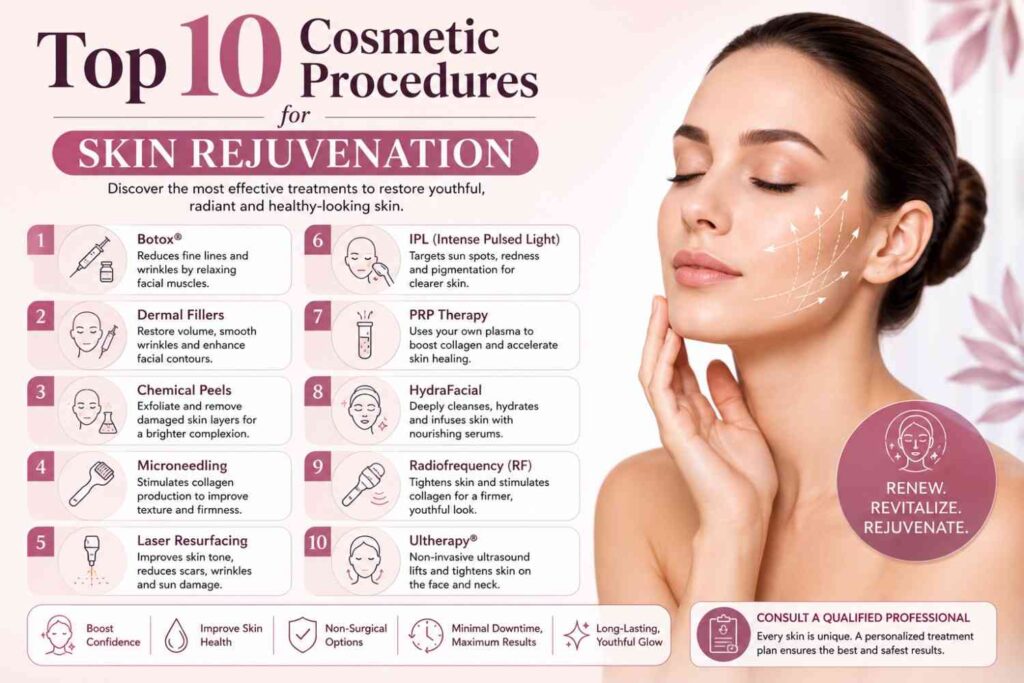
Top 10 Cosmetic Procedures for Skin Rejuvenation
Skin changes with age, sun exposure, stress, acne, lifestyle, and natural collagen loss. Fine lines may appear. Skin tone can become uneven. Acne scars, pigmentation, rough texture, enlarged pores, and facial volume loss can also make the skin look tired.
That is why many people search for the Top 10 Cosmetic Procedures for Skin Rejuvenation before booking a treatment. The goal is not always to look different. For most people, the goal is to look fresher, smoother, healthier, and more confident.
Cosmetic skin treatments range from light exfoliation to advanced laser and injectable procedures. Some treatments work on the surface. Others target deeper layers of the skin. In my experience, the best results usually come from choosing the right procedure for the right concern instead of following trends.
What Skin Rejuvenation Means
Skin rejuvenation is a broad term that refers to cosmetic and dermatological procedures designed to improve the appearance of aging, damaged, dull, or uneven skin. These treatments can target a wide range of concerns including wrinkles, fine lines, pigmentation, acne scars, rough texture, redness, skin laxity, and volume loss.
It is not a single treatment but rather a category of procedures that work in different ways depending on the skin issue being addressed. Some treatments focus on stimulating collagen production, while others work by resurfacing the outer skin layer or adding volume to restore a youthful appearance.
A professional consultation is essential before choosing any skin rejuvenation method because not every treatment suits every skin type or condition. Factors such as skin sensitivity, age, medical history, and specific concerns all influence the final choice of procedure.
The American Academy of Dermatology highlights that results from cosmetic treatments depend heavily on the skill, training, and experience of the practitioner performing them. This makes expert guidance a key part of achieving safe and effective outcomes.
Main Goals of Skin Rejuvenation
The primary goals of skin rejuvenation are to improve skin tone, texture, firmness, brightness, and overall facial balance. These treatments aim to restore a healthier, more youthful appearance while addressing specific skin concerns.
Different individuals require different approaches based on their skin condition. For example, someone with sun damage or dark spots may benefit from IPL or laser therapy, while someone with acne scars may achieve better results with microneedling, chemical peels, or fractional laser treatments.
An effective treatment plan always focuses on the root skin concern rather than trends or popular procedures. Personalized care ensures better results, improved safety, and long-term skin health benefits.
Non-Surgical vs Minimally Invasive Treatments
Skin rejuvenation treatments are often categorized as non-surgical or minimally invasive procedures. According to the Cleveland Clinic, common options include botulinum toxin injections, chemical peels, dermal fillers, intense pulsed light (IPL), and laser skin resurfacing.
Non-surgical treatments are popular because they generally involve less downtime compared to surgical procedures, making them more convenient for many patients. However, they still require proper assessment and expert application to ensure safety and effectiveness.
Even though these procedures are less invasive, they still carry potential risks such as irritation, swelling, or temporary side effects, which is why realistic expectations and professional supervision are important.
Why Personalised Assessment Matters
One thing I always check first is skin type, sensitivity, pigmentation risk, acne history, sun exposure, and previous cosmetic work. This matters because aggressive treatments may increase the risk of irritation, burns, scarring, or post inflammatory hyperpigmentation in some people.
A personalised plan is safer than choosing a treatment only because it is trending.
Top 10 Cosmetic Procedures for Skin Rejuvenation Compared
The Top 10 Cosmetic Procedures for Skin Rejuvenation can be compared by concern, downtime, and treatment depth. This makes it easier for readers to understand which option may fit their skin goals.
| Procedure | Best For | Downtime Level | Main Benefit |
|---|---|---|---|
| Laser resurfacing | Wrinkles, scars, texture | Medium to high | Skin renewal and collagen support |
| Chemical peel | Pigmentation, dullness, texture | Low to medium | Exfoliation and brighter skin |
| Microneedling | Acne scars, pores, fine lines | Low to medium | Collagen stimulation |
| RF microneedling | Mild laxity, scars, texture | Medium | Tightening and collagen support |
| IPL treatment | Redness, sun damage, spots | Low | Tone correction |
| Botox injections | Dynamic wrinkles | Low | Softens expression lines |
| Dermal fillers | Volume loss, folds | Low to medium | Restores facial volume |
| Microdermabrasion | Dullness, rough texture | Low | Gentle exfoliation |
| PRP therapy | Dull skin, early ageing | Low to medium | Uses platelet rich plasma |
| Skin tightening treatment | Mild laxity | Low to medium | Firms loose skin |
How to Read This Comparison
This table is intended as a general educational guide, not a medical diagnosis or personalized treatment recommendation. Skin rejuvenation results vary significantly depending on skin type, age, sensitivity, and lifestyle factors, so the same procedure may not deliver identical outcomes for everyone.
For example, laser resurfacing can improve scars, wrinkles, and texture, but it may not be suitable for every skin tone or lifestyle due to recovery time and sensitivity risks. Similarly, Botox can reduce expression lines effectively, but it does not address pigmentation, texture issues, or overall skin quality.
Each treatment in the comparison serves a different purpose, and understanding these differences is essential for making informed decisions. The most effective procedure is always the one that directly matches your specific skin concern rather than general popularity or trends.
A professional consultation helps ensure the right balance between safety, expectations, and desired results, especially when multiple treatment options are available.
Which Procedure Gives the Fastest Visible Change?
Botox and dermal fillers typically provide the fastest visible results because they directly target muscle activity or restore volume instantly. Improvements can often be seen within days, making them popular for quick aesthetic enhancements.
In contrast, treatments focused on skin quality—such as microneedling, chemical peels, IPL, and laser resurfacing—work more gradually. These procedures stimulate collagen production and skin regeneration, which takes time to show noticeable improvements.
For short-term goals like preparing for an event, lighter or fast-acting treatments may be more suitable. However, for long-term improvement of scars, wrinkles, or texture, a structured treatment plan over several sessions is usually required.
Resurfacing Procedures for Texture, Scars, and Pigmentation
Resurfacing procedures are cosmetic treatments designed to renew the outer layers of the skin and improve overall texture, tone, and clarity. They are commonly used to address concerns such as acne scars, dull skin, sun damage, pigmentation, and uneven skin tone. These treatments work by stimulating skin regeneration and encouraging healthier new skin cells to surface.
These procedures are among the most widely searched skin rejuvenation options because they offer visible improvement in skin quality. Depending on the technique used, resurfacing can range from gentle exfoliation treatments to more advanced laser-based procedures that target deeper layers of the skin.
Choosing the right resurfacing treatment depends on the severity of the skin concern, recovery time preference, and skin type. A dermatologist or qualified professional usually recommends the most suitable option after proper evaluation.
1. Laser Resurfacing
Laser resurfacing uses concentrated laser energy to improve skin texture, reduce wrinkles, fade scars, and correct uneven pigmentation. According to the Cleveland Clinic, this treatment can help reduce wrinkles and scars, even out skin tone, tighten the skin, and remove certain surface lesions.
There are two main types of laser treatments: ablative and non-ablative. Ablative lasers are more intensive and remove the outer layer of skin, often producing stronger results but requiring longer recovery time.
Non-ablative lasers are less aggressive, target deeper layers without damaging the surface, and typically involve shorter downtime, although multiple sessions may be needed for optimal results.
2. Chemical Peels
Chemical peels involve applying a controlled chemical solution to the skin to exfoliate damaged outer layers and promote new skin growth. The American Society for Dermatologic Surgery states that chemical peels may help treat acne scars, aging skin, hyperpigmentation, melasma, sun damage, and fine lines.
Peels are generally categorized into light, medium, and deep strengths. Light peels gently refresh the skin and improve dullness, while medium peels target pigmentation and fine lines more effectively.
Deep chemical peels are more intensive and require professional supervision due to longer recovery times and stronger skin reactions, but they can deliver more dramatic improvements.
3. Microdermabrasion
Microdermabrasion is a non-invasive exfoliation treatment that gently removes dead skin cells from the surface layer of the skin. The American Academy of Dermatology notes that after multiple sessions, skin can appear smoother, brighter, and more even in tone.
This treatment is ideal for individuals seeking mild improvements in skin texture and radiance with minimal downtime. It is generally safe for most skin types and is often used as a maintenance treatment.
However, microdermabrasion is not typically effective for deep acne scars or advanced wrinkles, but it can be useful for improving overall skin smoothness and supporting other skincare treatments.
Collagen Stimulating Procedures for Firmer Skin
Collagen stimulating procedures are treatments designed to improve skin firmness, elasticity, and overall structure by activating the body’s natural healing and repair mechanisms. Collagen is a key protein responsible for keeping the skin smooth, tight, and youthful, but its production naturally decreases with age.
As collagen levels decline, the skin may begin to appear thinner, looser, and less resilient. These procedures aim to counteract that process by encouraging the skin to rebuild collagen over time, resulting in gradual but long-lasting improvements in texture and firmness.
Unlike surface-level treatments, collagen-stimulating procedures work deeper within the skin. This makes them especially useful for concerns such as fine lines, acne scars, skin laxity, and uneven texture.
4. Microneedling
Microneedling is a minimally invasive procedure that uses fine needles to create controlled micro-injuries in the skin. According to the American Society for Dermatologic Surgery, this process is known as percutaneous collagen induction and involves precise puncturing at controlled depths to stimulate healing.
This controlled skin injury triggers the body’s natural repair response, increasing collagen and elastin production. As a result, the skin gradually becomes smoother, firmer, and more even in texture over time.
Microneedling is commonly used to treat acne scars, stretch marks, hyperpigmentation, melasma, and general skin texture concerns. The Cleveland Clinic also notes its effectiveness in reducing the appearance of scars, wrinkles, and stretch marks with consistent treatment.
5. RF Microneedling
RF (radiofrequency) microneedling combines traditional microneedling with radiofrequency energy to enhance collagen stimulation at deeper skin layers. It is often used to treat skin texture issues, fine lines, acne scars, and mild skin laxity.
While it can produce more advanced results compared to standard microneedling, it is also a more technically complex procedure that requires skilled handling and precise control. Proper settings and professional expertise are essential for safety and effectiveness.
The FDA has issued warnings regarding potential risks associated with improper use of RF microneedling devices, including burns, scarring, fat loss, disfigurement, and nerve damage. This highlights the importance of choosing an experienced and qualified provider.
6. PRP Therapy
PRP (Platelet-Rich Plasma) therapy involves using a concentrated component of the patient’s own blood to promote healing and skin regeneration. It is often combined with microneedling or injections to enhance overall skin quality and recovery response.
PRP is commonly used to improve dull skin, early signs of aging, fine lines, and mild texture irregularities. It works by delivering growth factors that support tissue repair and stimulate collagen production.
However, results can vary depending on the preparation method, treatment area, and individual biological response. Because of this variability, PRP should be clearly explained during consultation with realistic expectations rather than guaranteed outcomes.
Light and Energy Treatments for Tone and Redness
Light-based and energy-based treatments are advanced cosmetic procedures designed to improve skin tone, reduce redness, and treat pigmentation issues such as sun damage and uneven coloration. These treatments are widely used because they offer visible improvements without the need for surgery or long recovery periods.
They work by delivering controlled energy into the skin layers to target specific concerns while stimulating natural healing responses. Depending on the device and technique used, these treatments can address both superficial and deeper skin issues, making them suitable for a wide range of patients.
However, proper assessment is essential before undergoing any light or energy-based procedure because results can vary based on skin type, sensitivity, and underlying conditions. A professional consultation helps ensure safety and effectiveness.
7. IPL Treatment
IPL (Intense Pulsed Light) is a popular non-invasive treatment used to improve skin redness, pigmentation, sun damage, and uneven skin tone. According to the Cleveland Clinic, IPL is commonly included among nonsurgical cosmetic procedures for skin rejuvenation.
Unlike laser treatments that use a single focused wavelength, IPL uses broad-spectrum light that targets multiple skin concerns at once. This makes it effective for treating conditions such as brown spots, visible blood vessels, and general discoloration.
However, IPL is not suitable for everyone. Individuals with darker skin tones or conditions like melasma may require extra caution, as there is a risk of pigmentation changes if the treatment is not properly adjusted or performed by an experienced professional.
8. Non-Surgical Skin Tightening
Non-surgical skin tightening treatments use energy-based technologies such as radiofrequency or ultrasound to heat deeper layers of the skin. This controlled heating stimulates collagen production, which gradually improves skin firmness and elasticity.
These procedures are typically used for mild skin laxity rather than severe sagging. They are ideal for individuals looking for subtle lifting effects without undergoing invasive surgery or long recovery periods.
While results can be noticeable, they are generally gradual and require realistic expectations. Multiple sessions may be needed to achieve optimal improvement, and results vary depending on age, skin condition, and treatment consistency.
Safety Checklist Before Energy Treatments
Before any laser, IPL, RF, or ultrasound treatment, ask these questions:
- Is the provider licensed and trained?
- Is the device suitable for my skin tone?
- What side effects are common?
- What downtime should I expect?
- How many sessions are realistic?
- What aftercare do I need?
This simple checklist can prevent poor treatment choices.
Injectable Procedures for Wrinkles and Volume Loss
Injectable procedures are an important part of skin rejuvenation and are commonly included in the Top 10 Cosmetic Procedures for Skin Rejuvenation because they provide visible improvements without the need for surgery. Unlike resurfacing treatments such as lasers or chemical peels, injectables do not primarily target the skin surface but instead focus on facial movement, volume loss, and structural aging.
These treatments work beneath the skin to either relax overactive muscles or restore lost volume in specific facial areas. As a result, they are often used to reduce the appearance of wrinkles, soften facial folds, and enhance overall facial harmony in a subtle and controlled way.
Injectables are highly technique-dependent, meaning outcomes rely heavily on the skill, knowledge, and precision of the practitioner. Proper assessment of facial anatomy is essential to ensure natural-looking and safe results.
9. Botox Injections
Botox is a widely recognized brand name for botulinum toxin injections, which are used to temporarily relax specific facial muscles. According to the FDA, approved botulinum toxin products help reduce the appearance of facial wrinkles by blocking nerve signals that cause muscles to contract.
This treatment is most effective for dynamic wrinkles, which are lines formed by repeated facial expressions such as frowning, smiling, or squinting. Common treatment areas include forehead lines, frown lines between the eyebrows, and crow’s feet around the eyes.
However, Botox does not treat skin texture issues, pigmentation, or acne scars. Its primary role is to soften expression-related wrinkles rather than improve overall skin quality.
10. Dermal Fillers
Dermal fillers are injectable gels used to restore lost volume, smooth deep lines, and enhance facial contours. The FDA notes that dermal fillers are commonly used for facial wrinkles, lip enhancement, and other aesthetic improvements when administered by trained professionals.
Hyaluronic acid-based fillers are the most widely used because hyaluronic acid is a naturally occurring substance in the skin that helps maintain hydration and volume. When used correctly, fillers can produce natural-looking and balanced facial enhancements.
However, incorrect placement or excessive use can lead to complications such as uneven texture, swelling, or more serious vascular issues. This is why proper training and careful technique are essential for safe results.
Botox vs Fillers
Botox and dermal fillers are often confused, but they work in completely different ways. Botox relaxes muscle activity to reduce expression lines, while fillers restore or add volume to areas that have lost fullness over time.
For example, Botox is commonly used for frown lines between the eyebrows, whereas fillers are more suitable for hollow cheeks, deep folds, or volume loss around the lips and mid-face.
In some cases, a skilled practitioner may combine both treatments to achieve a more balanced and natural rejuvenation effect, but only after a detailed facial assessment and safety evaluation.
How to Choose the Best Cosmetic Procedure for Your Skin
Choosing from the Top 10 Cosmetic Procedures for Skin Rejuvenation can feel overwhelming because each treatment targets different skin concerns such as wrinkles, pigmentation, scars, or loss of volume. The most effective way to make a decision is to clearly identify your primary skin issue and match it with the appropriate treatment category rather than selecting based on trends or popularity.
It is also important to consider your skin type, lifestyle, downtime tolerance, and long-term goals. Some procedures deliver quick results with minimal recovery, while others require multiple sessions but offer deeper and longer-lasting improvements. Understanding these differences helps set realistic expectations.
A professional consultation plays a crucial role in final decision-making. Dermatologists or qualified practitioners can evaluate your skin condition in detail and recommend the safest and most effective treatment plan tailored specifically to your needs.
Ultimately, the best cosmetic procedure is not the most expensive or most popular one, but the one that directly addresses your concern, fits your skin biology, and aligns with your comfort level and lifestyle.
Step by Step Selection Guide
Follow this simple process:
- Identify your main concern: wrinkles, scars, pigmentation, dullness, redness, or laxity.
- Check your skin type and pigmentation risk.
- Decide how much downtime you can accept.
- Review your medical history and current medications.
- Ask for before and after examples from similar skin types.
- Choose a qualified provider instead of choosing the cheapest option.
This approach helps you avoid random treatment choices.
Best Procedures by Skin Concern
- For fine lines, consider Botox, microneedling, peels, or laser resurfacing.
- For acne scars, consider microneedling, RF microneedling, laser resurfacing, or chemical peels.
- For pigmentation, consider chemical peels, IPL, or selected lasers.
- For volume loss, consider dermal fillers.
- For mild laxity, consider RF microneedling or non surgical skin tightening.
When to Avoid Cosmetic Skin Treatments
You may need to delay treatment if you have active infection, uncontrolled acne flare, recent sunburn, pregnancy related restrictions, poor wound healing, or a history of keloid scarring.
A professional consultation is always safer than guessing.
Aftercare, Results, and Maintenance
Aftercare plays a crucial role in determining how well your skin heals and how effective your cosmetic treatment results will be. Even minimally invasive procedures can cause temporary irritation, sensitivity, or redness if proper aftercare instructions are not followed carefully.
Following the recommended aftercare routine helps reduce complications, improves comfort, and ensures that the skin recovers in an optimal environment. It also directly influences the quality, longevity, and natural appearance of the final results.
Because every procedure affects the skin differently, aftercare instructions may vary depending on whether the treatment involves resurfacing, injections, or energy-based technologies.
Common Aftercare Steps
Most cosmetic skin treatments require a basic aftercare routine that includes gentle cleansing, regular moisturizing, and consistent sun protection. Patients are usually advised to avoid harsh exfoliants, active skincare ingredients, and heavy makeup for a short recovery period.
For more intensive procedures such as laser treatments, chemical peels, or microneedling, aftercare becomes more specific and may include prescribed healing products, restricted sun exposure, and careful skin barrier protection.
Sun protection is especially important after treatments that target pigmentation or skin resurfacing. Without proper sunscreen use, there is a higher risk of pigmentation returning or even worsening over time.
How Long Results May Last
The duration of results depends heavily on the type of cosmetic procedure performed. Treatments like Botox typically offer temporary results that last for a few months before maintenance sessions are required.
Dermal fillers also provide temporary improvements, although their longevity can vary depending on the product used and the treatment area. In contrast, procedures such as chemical peels, laser resurfacing, and microneedling often require multiple sessions for best results and periodic maintenance to sustain improvements.
Long-lasting skin rejuvenation results are usually achieved through a combination of in-clinic treatments and consistent at-home care, including sunscreen use, proper skincare routines, hydration, and a healthy lifestyle.
Helpful Summary
- If your main goal is glow, start with lighter treatments.
- If your concern is scars or wrinkles, consider collagen or resurfacing options.
- If your concern is volume, injectables may help.
- If your concern is safety, start with a qualified provider.
Quick Answer About Top 10 Cosmetic Procedures for Skin Rejuvenation
The Top 10 Cosmetic Procedures for Skin Rejuvenation usually include laser resurfacing, chemical peels, microneedling, RF microneedling, IPL treatment, Botox injections, dermal fillers, microdermabrasion, PRP therapy, and non surgical skin tightening. Each treatment works differently. Some improve skin texture and pigmentation. Others soften wrinkles, restore facial volume, or support collagen production. The best choice depends on your skin type, age, concerns, budget, downtime, and medical history. I always recommend a professional skin assessment before choosing any cosmetic skin treatment.
What is the best cosmetic procedure for skin rejuvenation?
There is no single best procedure for everyone. Laser resurfacing may suit wrinkles and scars. Chemical peels may suit dullness and pigmentation. Botox may suit expression lines. Dermal fillers may suit volume loss. The best option depends on your skin concern, skin type, downtime, and treatment goals.
Are cosmetic skin treatments safe?
Many cosmetic skin treatments can be safe when performed by trained professionals using suitable methods and devices. Risks still exist, including irritation, swelling, bruising, pigmentation changes, burns, infection, or scarring. A consultation with a qualified provider helps reduce avoidable risk.
Which skin rejuvenation treatment is best for wrinkles?
Botox can help dynamic wrinkles caused by muscle movement. Laser resurfacing, microneedling, RF microneedling, and chemical peels may improve fine lines and skin texture. Dermal fillers may help deeper folds caused by volume loss. A combined plan may work better than one treatment alone.
Is laser resurfacing better than a chemical peel?
Laser resurfacing and chemical peels work differently. Laser treatments use light energy, while peels use chemical exfoliation. Lasers may be better for deeper texture issues and scars. Peels may be better for surface pigmentation and dullness. The right choice depends on skin type and concern.
How many skin rejuvenation sessions do I need?
The number of sessions depends on the treatment and the concern. Microdermabrasion, microneedling, IPL, and peels often need a series. Botox and fillers may show faster visible changes but need maintenance. Your provider should explain a realistic treatment plan before starting.
Can darker skin tones have cosmetic procedures?
Yes, many cosmetic procedures can be performed on darker skin tones, but settings, technique, and treatment choice matter. Some lasers, peels, and IPL treatments carry a higher risk of pigmentation changes if used incorrectly. Choose a provider experienced with diverse skin types.
Conclusion
The Top 10 Cosmetic Procedures for Skin Rejuvenation include laser resurfacing, chemical peels, microneedling, RF microneedling, IPL, Botox, dermal fillers, microdermabrasion, PRP therapy, and non surgical skin tightening. Each option has a different purpose.
The safest and most effective choice depends on your skin concern, skin tone, downtime, age, medical history, and expectations. I recommend starting with a professional consultation and building a treatment plan that improves your skin gradually and safely.